System Design · Issue 19
Why AWS Chooses to Fail 5% of Customers Completely
AWS would rather fail a small slice of customers completely than degrade for everyone. Here's the architecture behind that choice.
The problem
Failures that travel with code
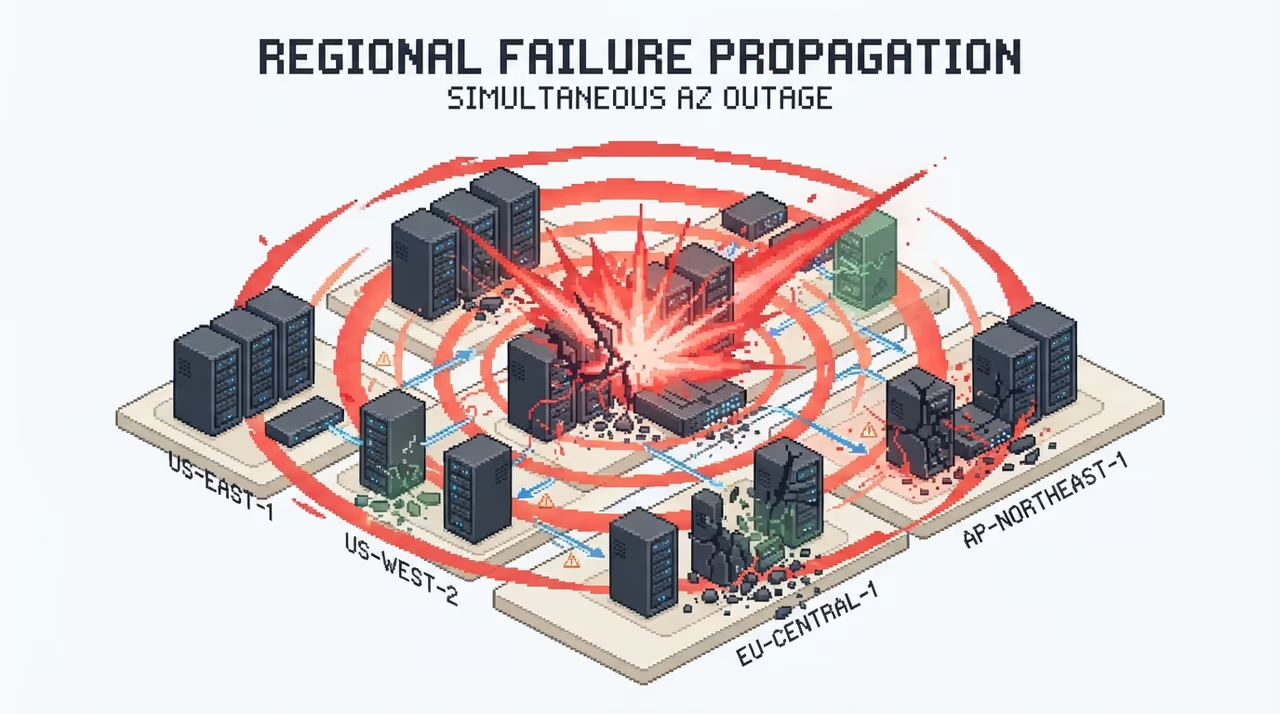
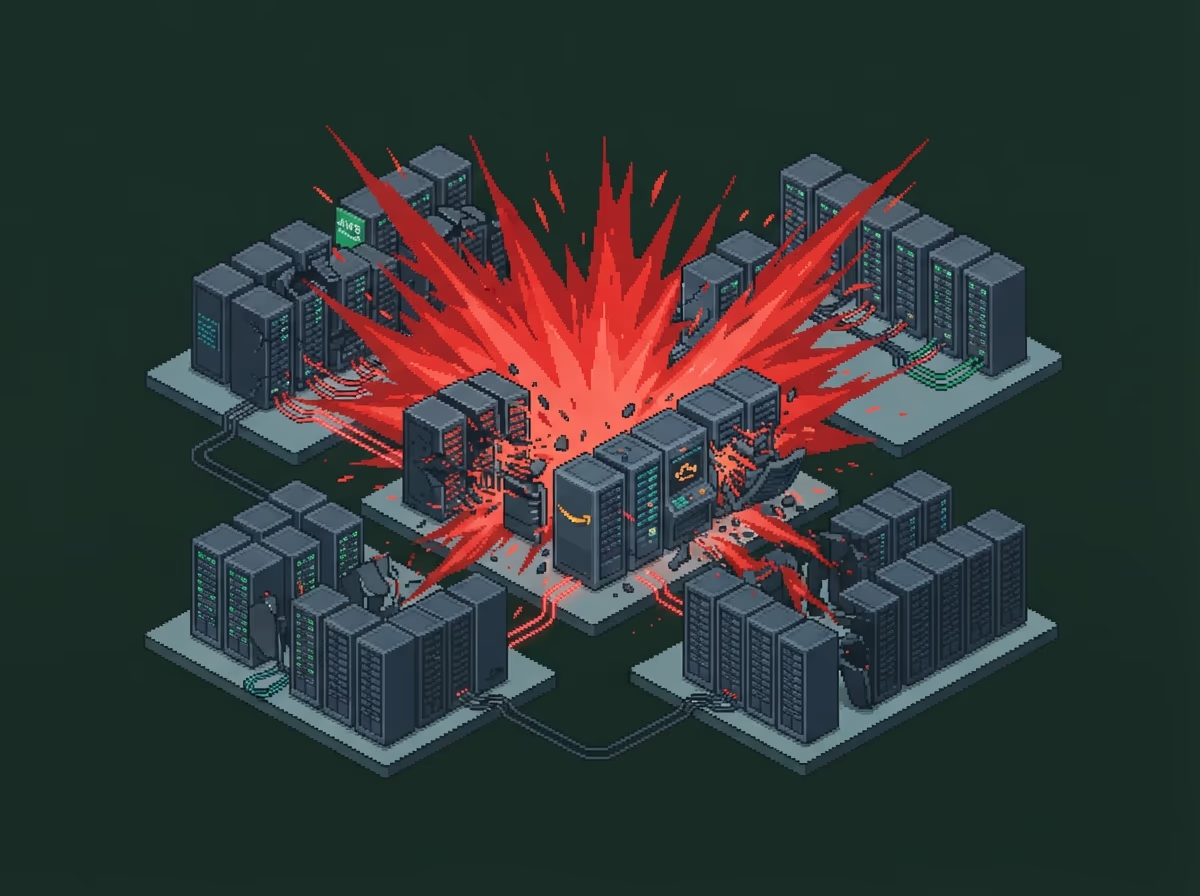
Multi-AZ and Multi-Region replication are the standard answers to hardware failure. They do nothing for failures that travel with the code and data. A bad deployment, a poison-pill request, a configuration change applied everywhere, or a single tenant hammering a shared resource arrives identically in every AZ and every Region at the same instant.
AWS has used cell-based architecture internally for more than a decade to solve exactly this class of failure. The Well-Architected guidance frames the design question directly: is it better for 100% of customers to experience a 5% failure rate, or for 5% of customers to experience a 100% failure rate? Cell-based architecture is what you build when the second answer is correct.
Is it better for 100% of customers to see a 5% failure rate, or 5% to see 100%?
The mechanism
Three components, one thin router
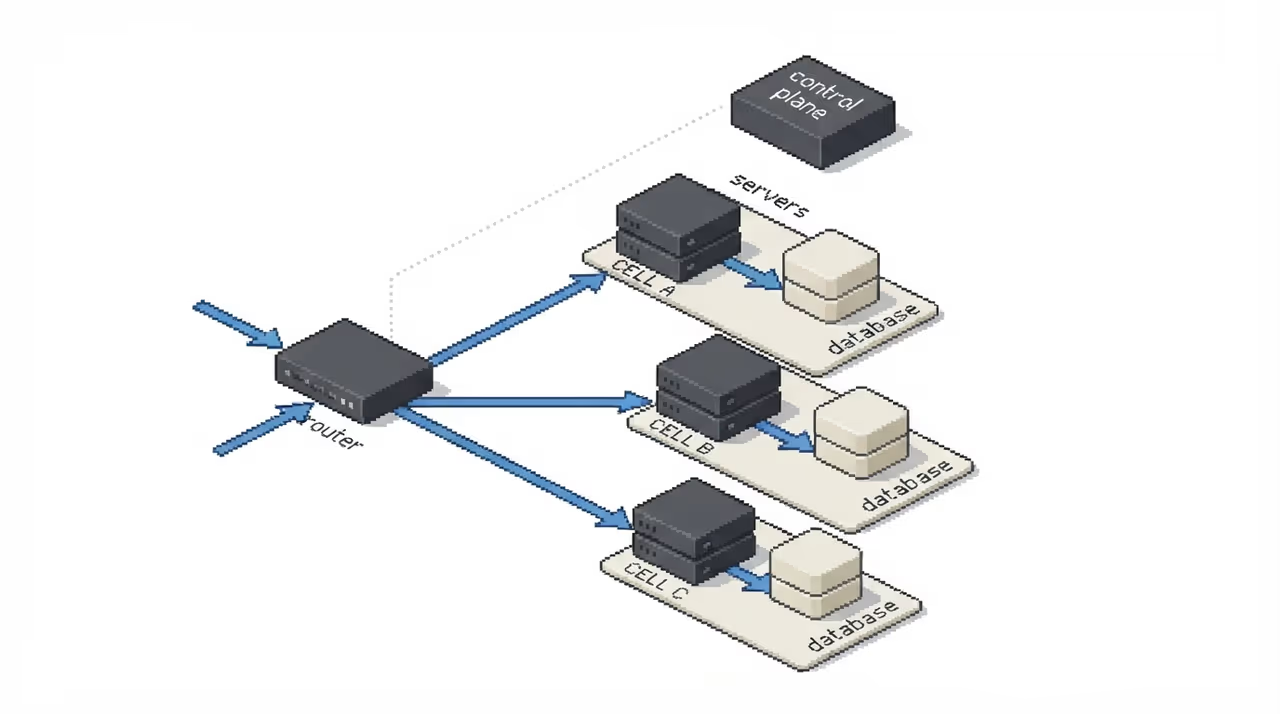
A cell-based system has exactly three parts. The cell router directs each request to the right cell based on a partition key like customer ID. It must be the thinnest possible layer, simpler and more reliable than anything it fronts. Behind it sit cells, each a complete independent workload instance with its own compute, storage, and state, sharing nothing.
The control plane provisions cells, migrates customers, and deploys code, but stays off the request path. Control planes fail more often than data planes, so the router loads its cell mapping into memory from S3 and serves from that copy indefinitely. Even if the control plane, S3, or an entire zone is down, the router still directs traffic. Stale routing beats no routing.
Static stability — A data plane that keeps serving from cached in-memory state when its control plane is down. The router treats its mapping as a snapshot, not a live dependency.
The numbers
Blast radius shrinks linearly
Cells have a fixed maximum size. You cap each component and scale by adding cells, not by growing them. The cost concern is often misplaced: an application with 30 hosts might keep the same 30 hosts, just grouped behind a router.
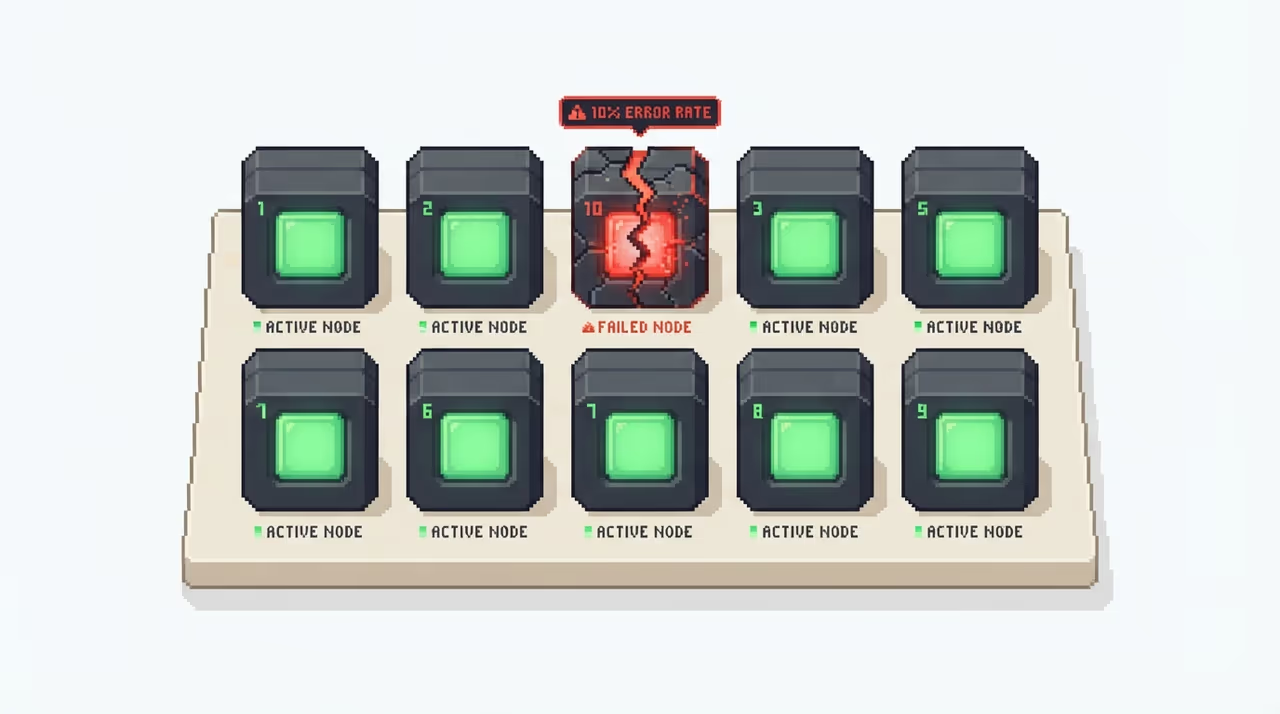
Spread a workload across 10 cells and a failure in one leaves 90% of requests unaffected. Across 3 cells, the worst-case initial failure is 33% of capacity instead of 100%. Recovering a database with 0.1% of the data is also far faster than recovering 100%.
Deployment as blast-radius control
Deployments proceed cell by cell in waves, with the first cell acting as a canary. Bake time between waves ranges from 15 minutes to several hours. If a bad change surfaces, it hits one cell, not the fleet.
The tradeoff
What cells don't contain
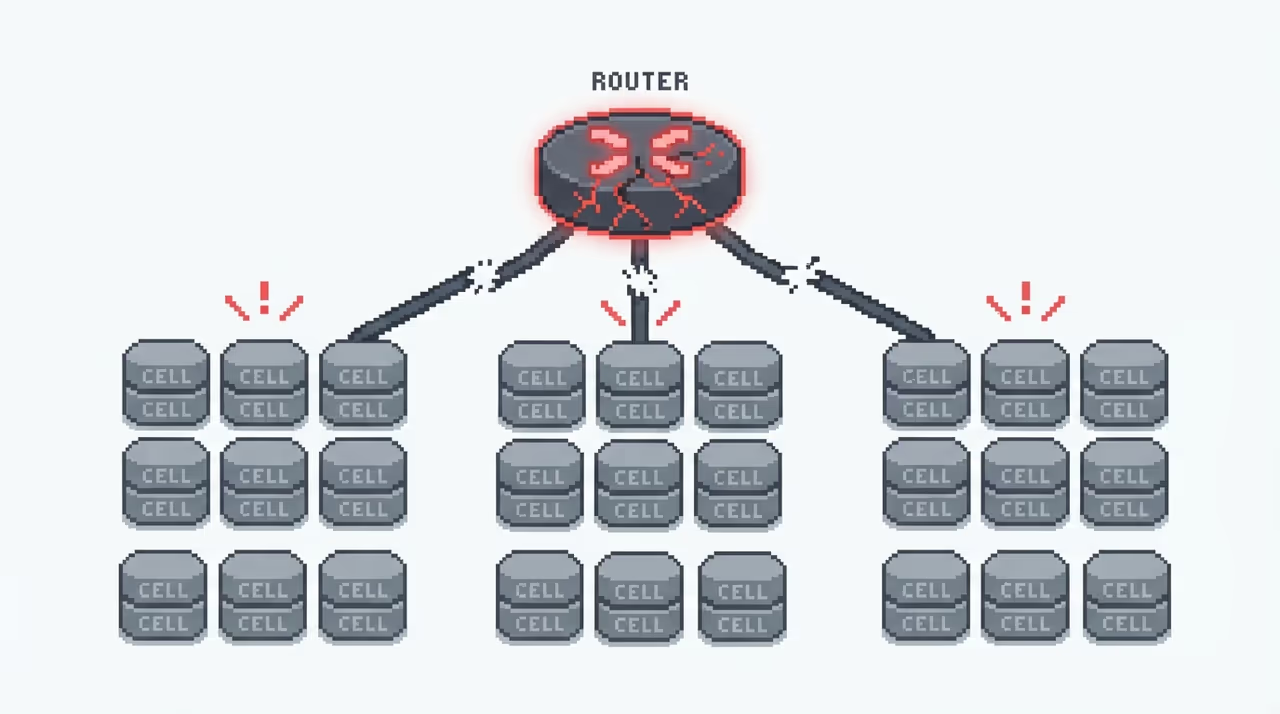
Cells only contain what is actually inside them. The cell router itself is a shared dependency that cannot be cellularized, and it must be operated at a higher reliability bar than everything it fronts. If the router fails, every cell is unreachable. Cells also provide no protection against any other shared dependency that all cells rely on.
The operational cost is real. Certificate rotation, patching, capacity planning, and on-call runbooks all scale with the number of cells. Data that naturally crosses cell boundaries, like account settings, billing, and notifications, creates severe consistency complexity. Cells are explicitly not a disaster recovery mechanism.
Which failure classes cells actually contain
Multi-AZ handles host and rack failures. Multi-Region adds protection against AZ and Region impairment. Cells add the layer nothing else covers: bad deployments, poison-pill requests, tenant overload, and operational mistakes on the live system, all scoped to a single cell. The one class cells cannot touch is a failure of a dependency shared by every cell, including the router itself.
Wrap-up
Containment over redundancy
Why it matters
The cell-based pattern reflects a specific bet: that the worst failure mode in a large distributed system is not hardware loss but correlated software failure, where the same bad code or data hits every replica simultaneously. Redundancy across AZs and Regions does not help when the failure arrives with the deployment. Cells accept a small permanent blast radius in exchange for never having a large one, and they push the hard reliability requirement onto a single thin router rather than spreading it across the fleet.
The short version
- Cells contain failures that travel with code and data: bad deploys, poison-pill requests, and tenant overload, which Multi-AZ and Multi-Region cannot stop.
- A cell-based system has three parts: a thin **cell router**, independent **cells** that share no state, and a **control plane** kept off the request path.
- The router loads its mapping into memory and serves from the cached copy indefinitely. **Stale routing beats no routing.**
- Blast radius shrinks linearly with cell count: 10 cells means one failure leaves 90% unaffected.
- The cell router is a shared dependency that cannot be cellularized, and cells are not a DR mechanism.
Sources
- 1.Journey to Cloud-Native Architecture Series #7: Using Containers and Cell-based design for higher resiliency and efficiency | AWS Architecture Blog
- 3.Cell-Based Architecture and Shuffle Sharding on AWS - Blast Radius ...
- 5.What is a cell-based architecture? - Reducing the Scope of Impact with ...
- 7.AWS re:Invent 2018: How AWS Minimizes the Blast Radius of Failures (ARC338)
- 9.Reducing the Scope of Impact with Cell-Based Architecture
- 10.Why use a cell-based architecture? - Reducing the Scope of Impact with Cell-Based Architecture