
Two minutes a day
Become a better
AI engineer.
Learn how real systems are built by making the decisions behind them. One question at a time, across retrieval, agents, evals, scaling and system design, without opening another course you never finish.
Already a member? Sign in
In the Raft consensus algorithm, how is a new leader chosen?
Every answer moves you along a 14-rank ladder, from Intern to Senior Fellow.
How it works
A loop short enough to keep
Nothing to schedule and nothing to finish. Open the app, answer what it gives you, and close it.
- 1
Answer one question
Single choice, multiple choice, true or false, or drag the steps into the right order. Two minutes is enough.
- 2
Read the mini lesson
Short slides with diagrams cover the concept behind the question. They ship with the app, so they work on a plane.
- 3
Revisit what you missed
A wrong answer goes into your error set and keeps coming back until you answer it correctly.
Transformers and large language models
What the models behind ChatGPT really are
LLMs & Foundation Models ships with 3 mini-lessons today. The rest are being written.
What is inside
Four ways to spend the same two minutes.
Practice
One question at a time, across 20 areas, picked to sit just past what you already know.
Library
101 mini-lessons with diagrams, written to be read in a few minutes and to work offline.
Digest
A short illustrated read on what shipped in the industry this week, released in volumes.
PlayBeta
Series and Shorts: system design you work through as a story rather than a question.


SeriesBeta
System design you play out with a team.
A series is a fictional company with a season of episodes and the same coworkers in every one. You read what is breaking, ask the team questions, and pick the design. Every decision is rated the way a chess engine rates a move, from brilliant down to blunder, and the ending you reach is the one your calls earned.
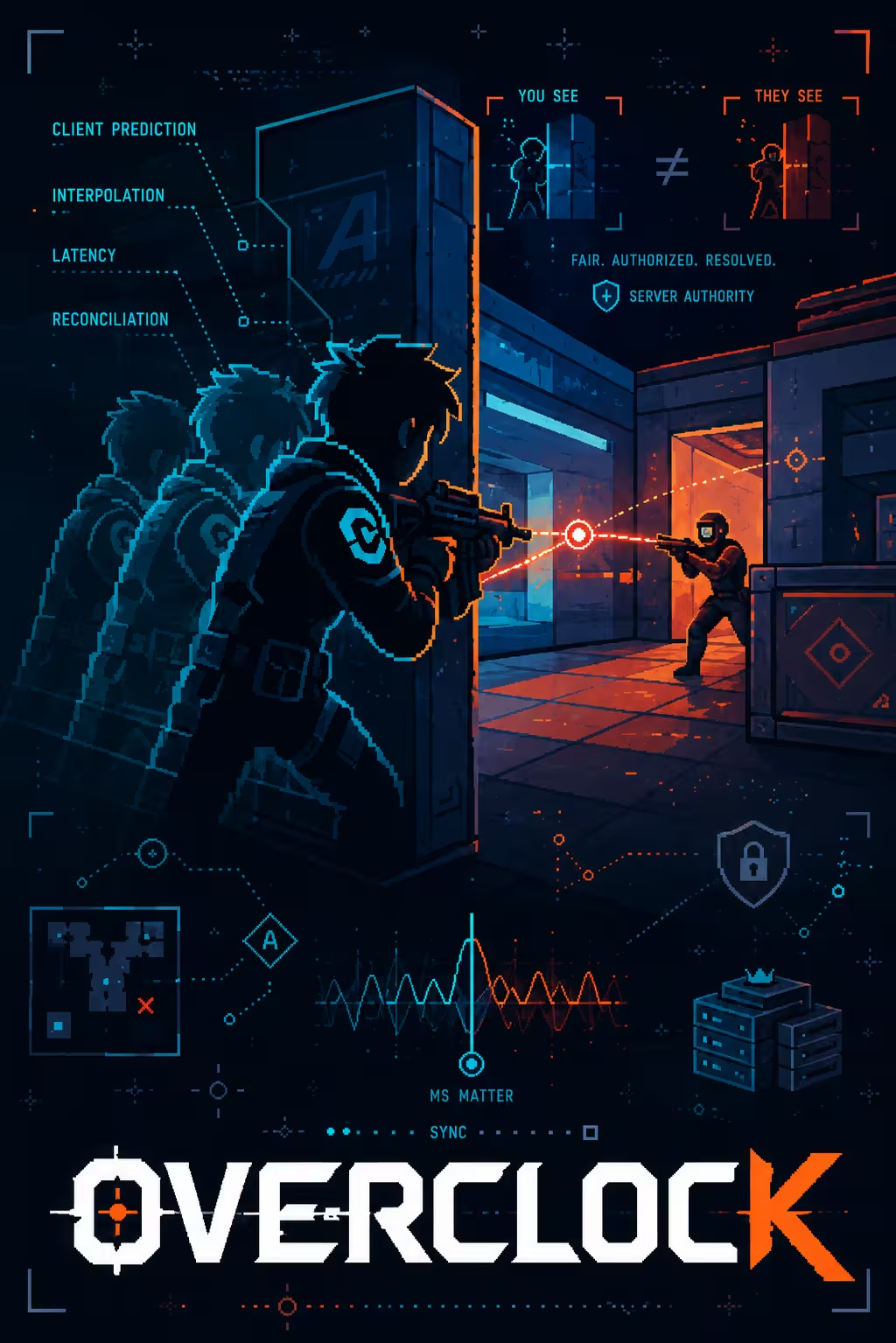
Beside this is Overclock, a 5v5 shooter in the month its netcode stops being a prototype. Players sprint through a doorway and the game yanks them back out of it. Somebody has to decide what to do about it, and in this episode it is you.
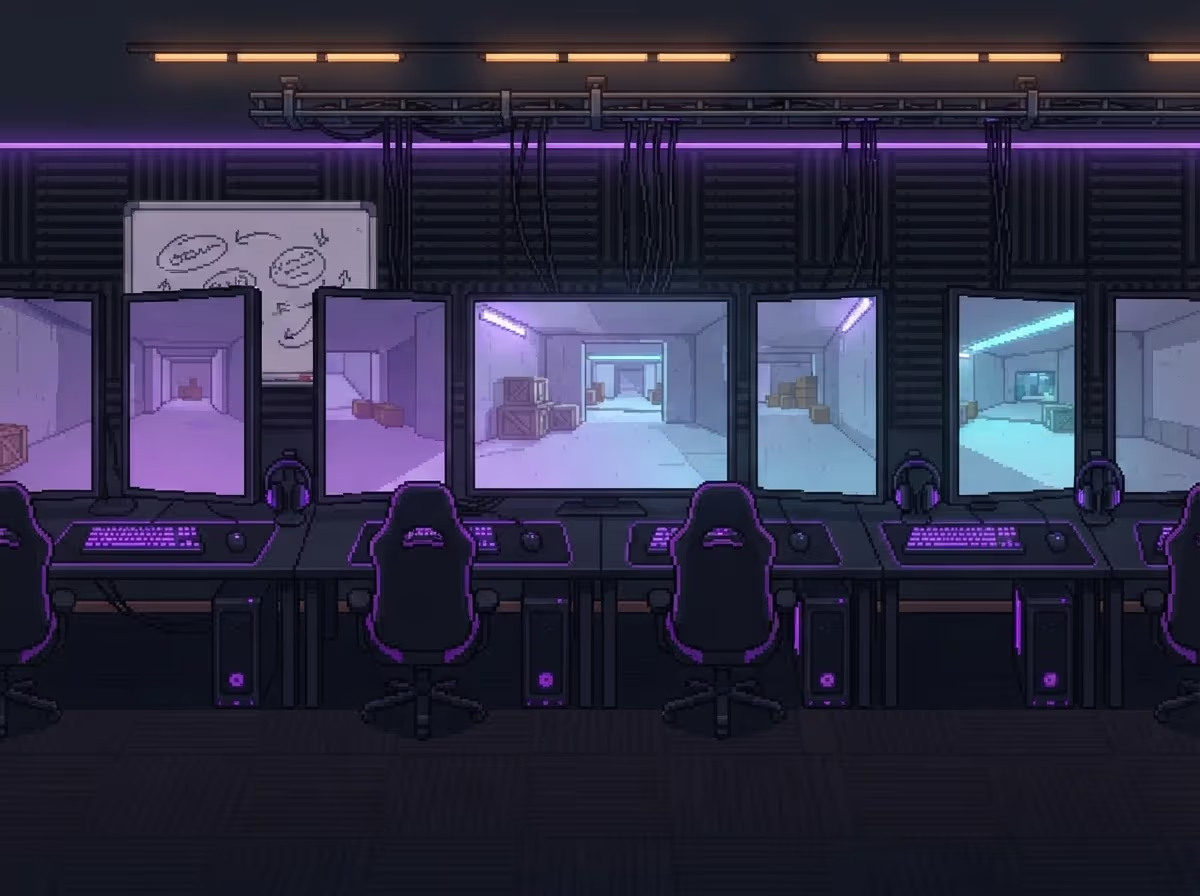
Overclock · S1E2
Two machines, one doorway
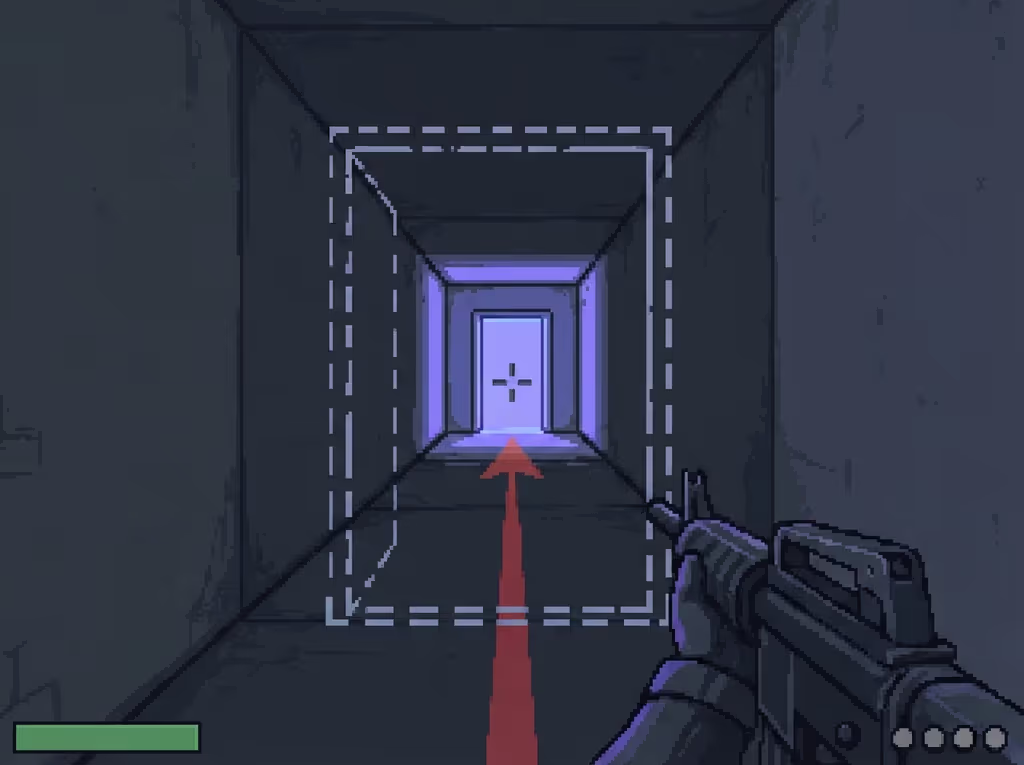
One player, one round
- 1 in 9
- updates disagree
- 0.1 m
- typical gap
- 0.5 m
- worst gap
- 6
- inputs thrown away
Every correction moves you to a place you have already left, and you watch each one happen.
Uber Engineering
Cinnamon: Using Century Old Tech to Build a Mean Load Shedder
The path today
- Request
- One shared channel
- Goroutines
- Handler
Concurrency is bounded by how many goroutines drain one Go channel, and the caller's priority is configured per service.
Your call
Should the load shedder keep bounding concurrency with one shared Go channel, or replace it with a bucketed priority queue and a scheduler?
ShortsBeta
Five minutes inside a real engineering write-up.
A Short takes one published engineering post and turns it into a conversation with the team that wrote it. The systems, the numbers, and the decisions are theirs, pulled from the post and credited back to it.
At each fork you commit to what you would have done before the answer appears. Then you see what they actually shipped, and what it cost them.
- Per short, start to finish
- 5 minPer short, start to finish
- Engineering blogs covered
- 21Engineering blogs covered
Built so far from Uber, Netflix, Spotify, DoorDash, Instacart, Meta, Perplexity, OpenAI, Anthropic, ClickHouse, Shopify, LinkedIn, Slack, Canva, Notion, Pinterest, Stripe, GitHub, Cloudflare, Fly.io and Cursor.
RewardsBeta
Answer questions. Open crates. Dress the part.
Finish the day’s goal and a crate is waiting the next time you open the app. Inside is one of 312 items across 9 slots— headwear, outfits, eyewear, companions, backdrops and the rest — and it is yours to put on whichever character you have been building.
Astro Dome
The Monolith
VR Rig
Plate Armour
Ascension
Load Test
Neon Mohawk
Hotfix

Finish the day’s goal
Your crate is waiting
- Standard50%
- Field30%
- Specialist13%
- Exotic5%
- Unusual2%
- Items to collect
- 312Items to collect
- Unusual items
- 11Unusual items
What a level is worth
Every level you climb is worth about $90,000 a year.
Median total compensation runs from $155,000 at entry to $551,000 at principal. What separates one rung from the next is a promotion packet and an interview loop, and both of them turn on whether you can explain how consensus works, when a cache goes stale, and why the write took eight seconds.
That is the entire question bank. Two minutes a day, on the things you get asked when the raise is on the table.
- Median raise per level
- +$90KMedian raise per level
- Entry to principal
- 3.6×Entry to principal
Median total compensation
US, 2025- Entry Level$155,000
- Software Engineer$226,000
+$71K over Entry Level
- Senior Engineer$312,000
+$86K over Software Engineer
- Staff Engineer$457,000
+$145K over Senior Engineer
- Principal Engineer$551,000
+$94K over Staff Engineer
Median total yearly compensation, counting salary, stock, and bonus. Levels.fyi 2025 End of Year Pay Report, from 245,000+ self-reported submissions across 5,000+ companies, and weighted toward tech employers. Across all US software developers the Bureau of Labor Statistics puts the median at $133,080 (May 2024).
One week of your attention
MinutesOver a year that is 40 entire days spent scrolling, against 12 hours spent getting promoted. The social figure is the average user’s 18 hours 36 minutes per week, counting feeds and online video both, from GWI via DataReportal, Q4 2025.
Instead of doom scrolling
You already spend 18 hours 36 minutes a week on a feed.
Nobody needs to find time to grow. The time is already there, and it is going to a feed that will not remember you tomorrow. Two minutes a day comes to 14 minutes a week, which is about 1 percent of what you spend scrolling.
Keep the rest. Just move the first two minutes, the ones that go to a feed before you are fully awake, and spend them on one real question instead.
- A week of leveling up
- 14mA week of leveling up
- Of what you already scroll
- 1%Of what you already scroll

Two minutes today beats a course you never finish.
Pick where you want to start, answer your first question, and see where you land.