Deep Dive · Issue 16
The config update double standard: why infrastructure changes bypass the guardrails code goes through
IaC changes are 10% of commits but take disproportionate review effort, and the LLM guardrails meant to catch them are probabilistic theater.
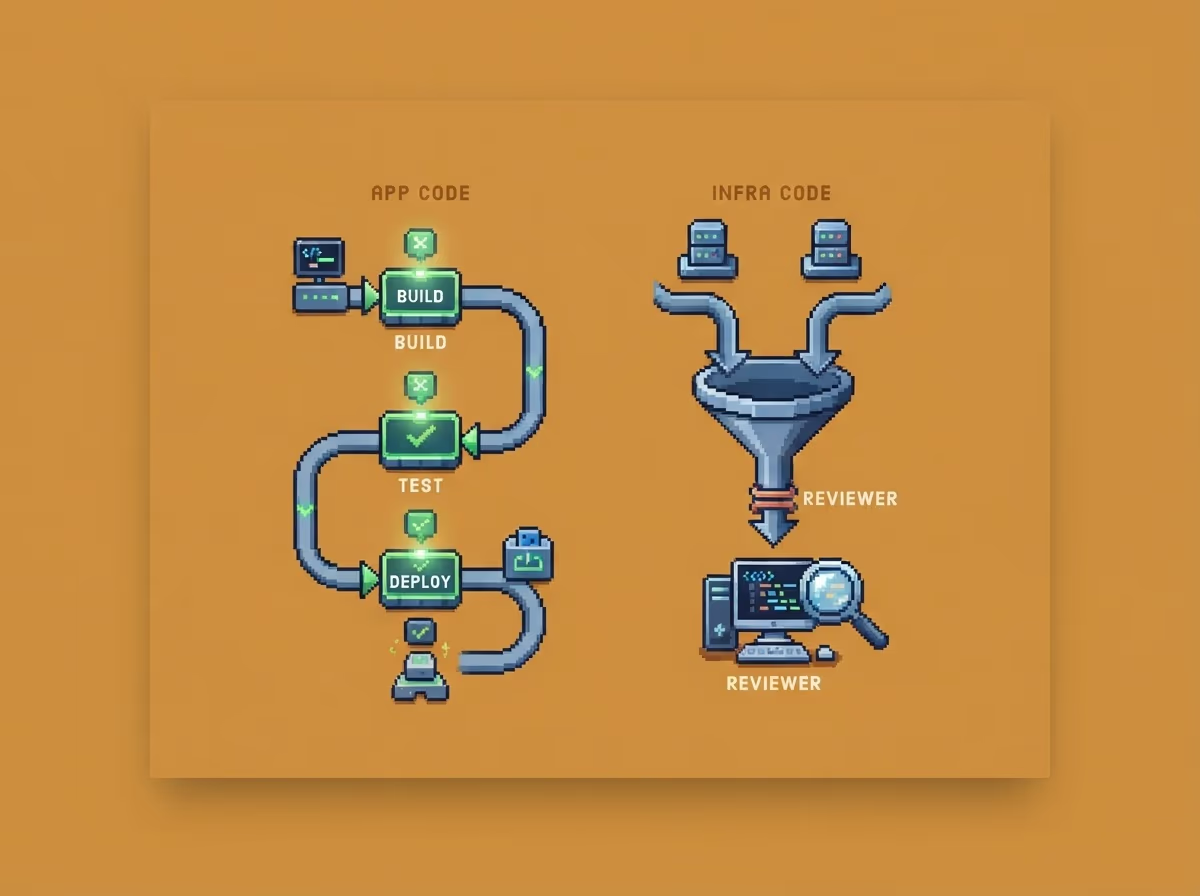
The disparity
10% of changes, disproportionate pain
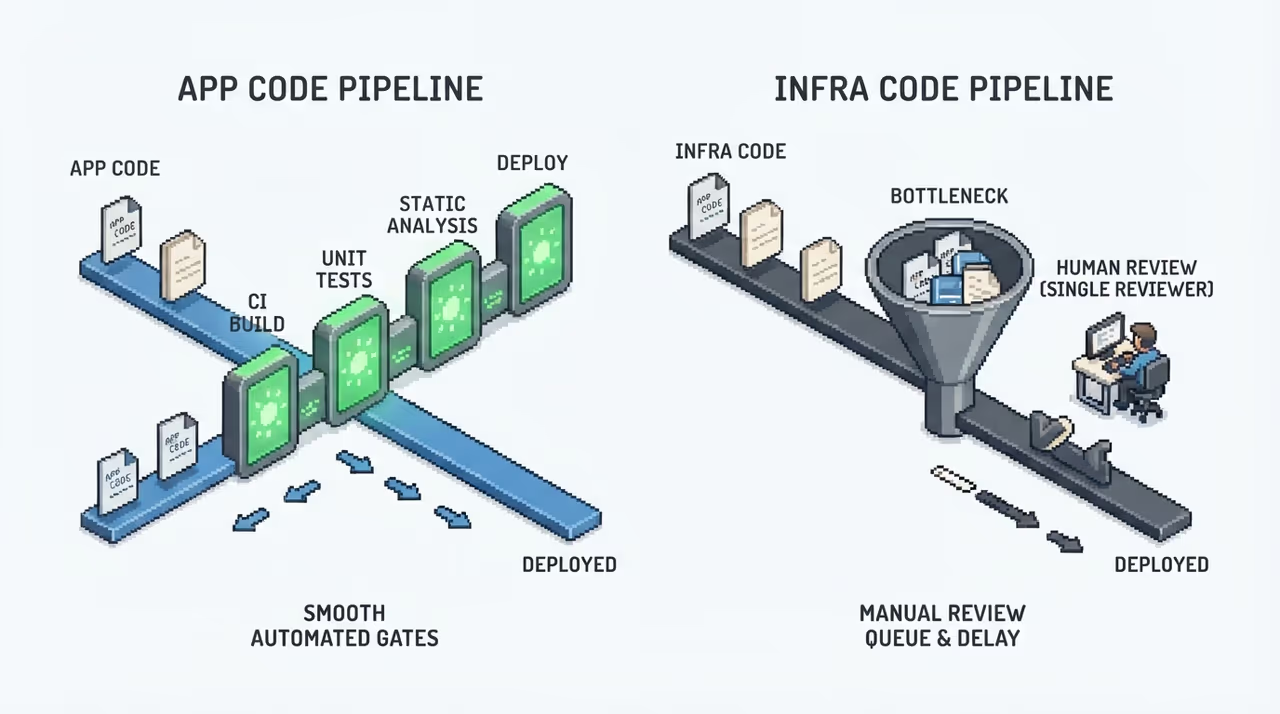
Infrastructure-as-code changes represent only 10% of all code changes but require disproportionate effort to review. IaC developers produce 1.82x more code churn than non-IaC changes, and IaC changes take 1.2x longer to be reviewed during the development phase.
The reviewer bottleneck
The strain concentrates on a handful of people. The top 5% of reviewers participate in 44% to 75% of all IaC code changes, and reviewers exchange 1.1x more messages per IaC change than for ordinary code. Review effort scales with operational stakes, but the reviewer pool does not.
Application code
10x volume, distributed review
IaC changes
1.82x churn, concentrated on 5% of reviewers
Probabilistic guardrails
LLM review is not a security control
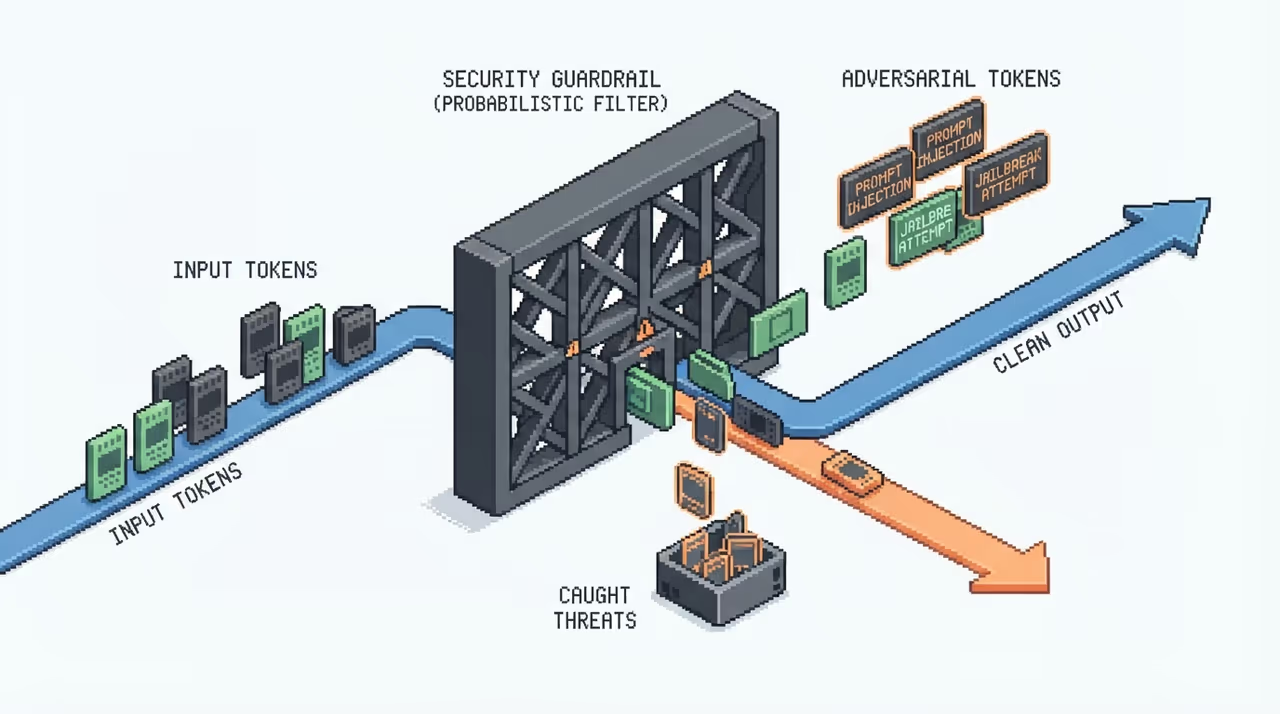
AI guardrails are instructions in system prompts: probabilistic text generators, not deterministic rule engines. They are bypassable by mixed-language inputs or adversarial framing, which makes them a soft barrier rather than a hard gate.
Confirmation bias exploitation — Framing a malicious PR as a "security improvement" or "urgent fix" reduces LLM vulnerability detection rates by 16 to 93 percentage points.
One-shot adversarial framing attacks succeed in 35% of cases against GitHub Copilot (interactive assistant). Against Claude Code (autonomous agent), iterative attacks succeed in 88% of cases. The autonomous setting is worse because there is no human in the loop to notice the framing.
The fix is deterministic. Explicit instructions to ignore metadata and full redaction of PR descriptions restores detection in 100% of interactive cases and 93.75% of autonomous cases. The guardrail works when it stops reading the attacker's cover story.
The shift
From rubber stamps to deterministic gates
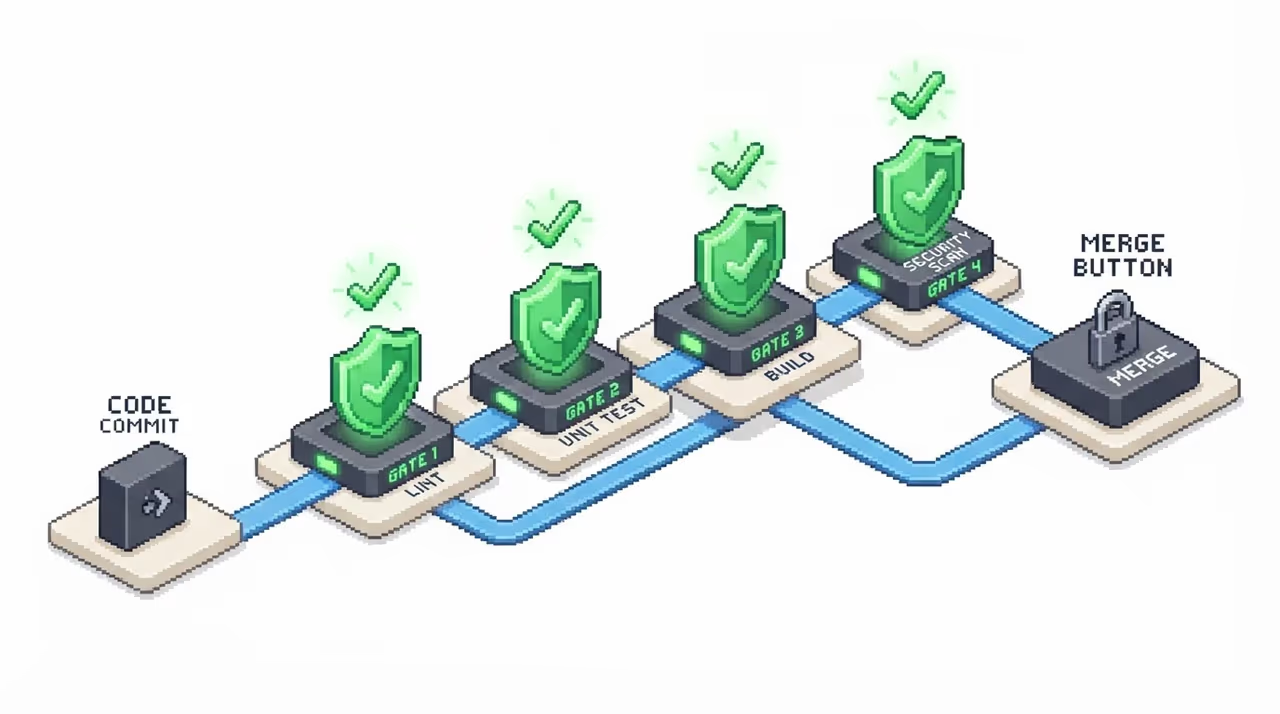
With AI tool adoption among developers reaching 90%, AI generates code faster than human reviewers can inspect it, producing rubber-stamped approvals and false confidence. Human review becomes a ritual when the volume overwhelms the reviewer.
The 4-layer replacement
Teams are replacing ritualistic human approval with a layered pipeline of deterministic enforcement: linting, static analysis and security scanning, test execution and coverage thresholds, and branch protection that blocks the merge until every check passes.
- Lint & format (syntax / style)
- Static analysis & scanning (insecure defaults, secrets)
- Test & coverage (untested edge cases)
- Branch protection (merge blocked until green)
Each layer is a rule, not a judgment. The gate blocks the merge mechanically, which matters most where a human reviewer is already overworked and the blast radius is a production data center.
Real-world consequences
Misconfigurations take down data centers
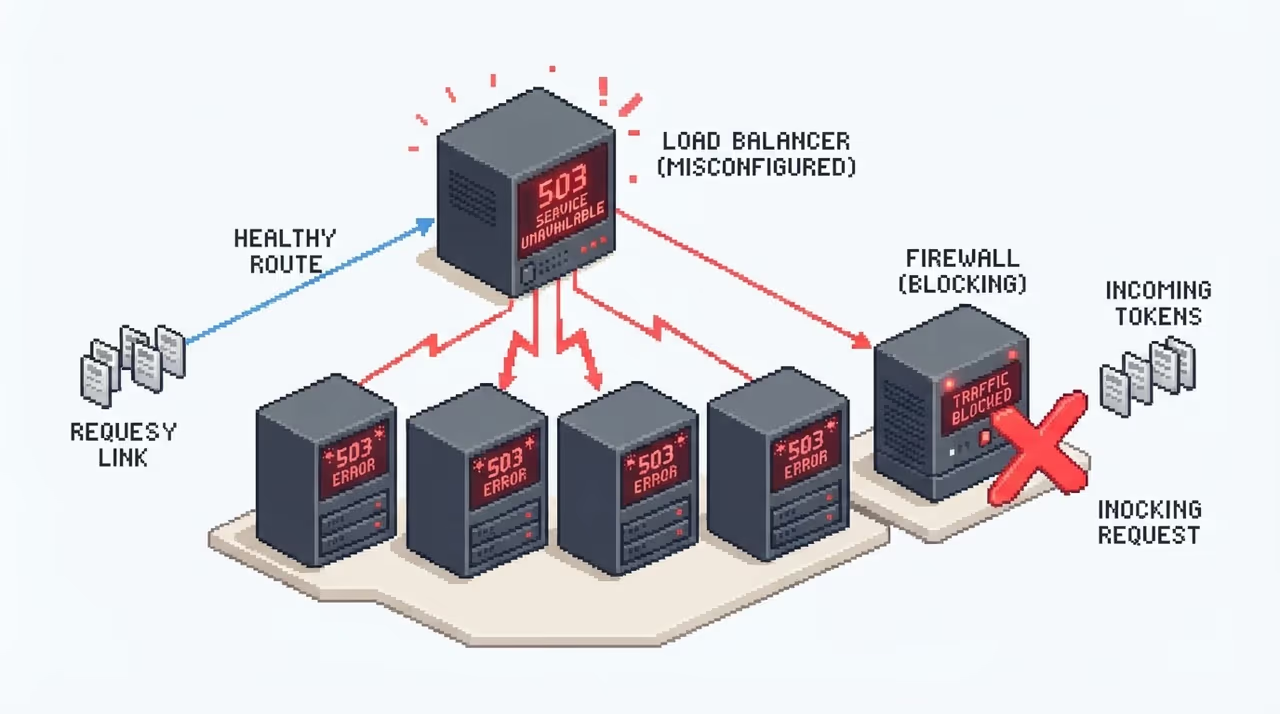
Human error contributes to 66% to 80% of all data center outages, and of those, 58% involve staff failing to follow established procedures. The procedures exist; the gap is in enforcement.
The cost is steep. 54% of significant outages cost more than $100,000 to remediate, and 20% cost more than $1 million.
What the root causes look like
Root cause analyses frequently point to concrete misconfigurations: load balancer pools missing service backends causing 503 errors, DNS zone files deployed with a missing A record, firewall ruleset changes that accidentally block internal API traffic, and backup paths changed in config files but not reflected in automation scripts. Each is a small edit that sailed past a guardrail.
Config editNo deterministic check (reviewer overburdened)Misconfiguration shipsOutage
Wrap-up
Guard the path with the most blast radius
Why it matters
Infrastructure changes carry the largest blast radius in any system, yet they receive the least deterministic protection. The review process is strained by reviewer concentration, the LLM guardrails meant to fill the gap are bypassable probabilistic filters, and the outages that result are overwhelmingly traced to human error and skipped procedures. The fix is structural: deterministic CI/CD gates that block a merge mechanically, applied hardest where the config lives.
The short version
- IaC changes are **10%** of commits but generate **1.82x** more churn and **1.2x** longer review times, concentrated on the top 5% of reviewers.
- LLM guardrails are probabilistic text generators, not security controls; adversarial framing drops vulnerability detection by **16 to 93** percentage points.
- Redacting PR descriptions restores detection in **100%** of interactive cases and **93.75%** of autonomous cases.
- Teams are replacing rubber-stamped human review with a **4-layer** deterministic CI/CD pipeline: lint, static analysis, tests, branch protection.
- Human error drives **66% to 80%** of data center outages; **58%** of those involve staff failing to follow existing procedures.
Sources
- 1.[PDF] Towards understanding code review practices for infrastructure-as ...
- 2.Medium
- 3.Measuring and Exploiting Confirmation Bias in LLM-Assisted Security Code Review
- 5.AI-Generated Code Needs Verification, Not Human Approval
- 6.Common Data Centre Problems 2026: Root Causes, Downtime Costs & Proven Solutions
- 7.Data Center Outage: Common Causes and Proven Prevention Methods AnD Cable Products
- 9.50 Root Cause Analysis Examples: Hardware, Software, Configuration, and More - Selector