News · Issue 1
OpenAI's Confidential IPO Filing
OpenAI confirmed a confidential S-1 that reveals almost no numbers, but the timing alone signals how badly the AI labs now need public-market money.
June 8, 2026
A filing that says almost nothing
On Monday, June 8, 2026, OpenAI put out a two-sentence post confirming it had submitted a confidential draft S-1 to the SEC.
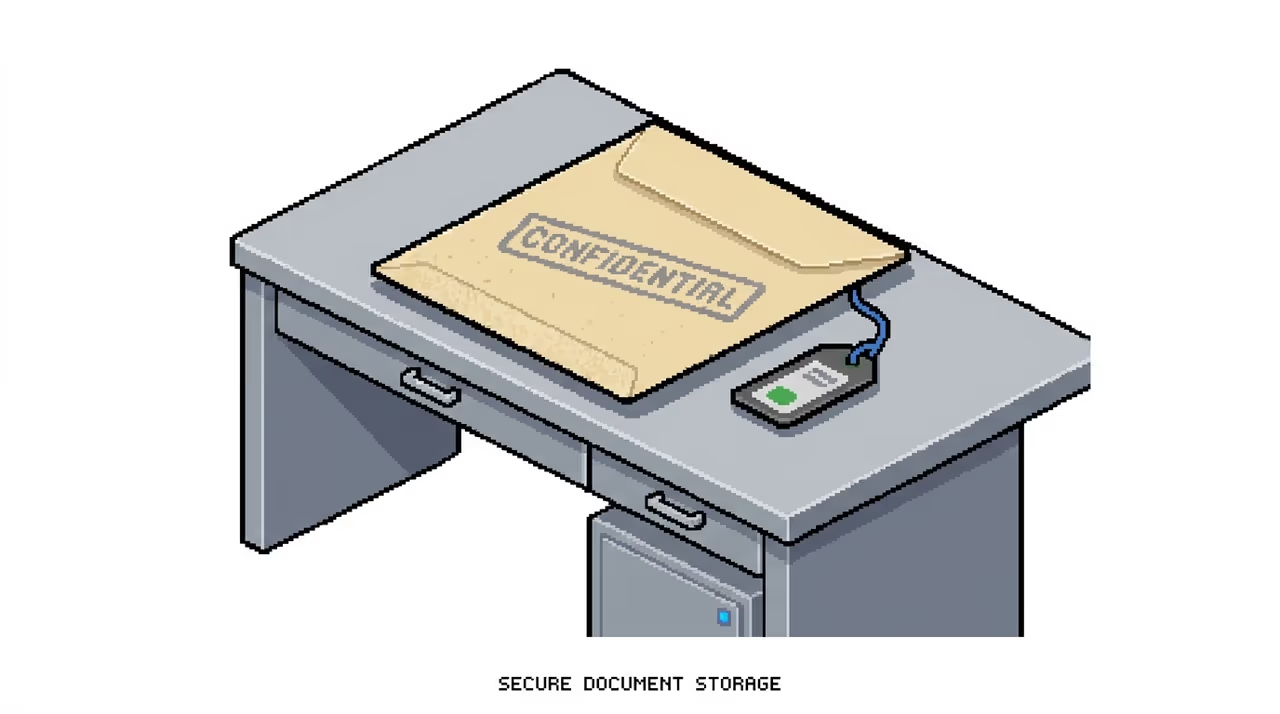
It named no price, no share count, and no date. The company's own reason for going public with the news was blunt: they expected it to leak anyway.
  DRAFT S-1   (confidential)
  ---------------------------
  Price per share ......  --
  Shares offered .......  --
  Filing date ..........  --
  Valuation ............  --
"We expect it to leak so we're just announcing it. We have not decided on timing yet; it may be a while."
The post was made under Rule 135 of the Securities Act, which lets an issuer announce a proposed offering without it legally counting as an offer to sell. That is precisely why there are no numbers attached. The headline is not that OpenAI is going public. It is that OpenAI wants the option to.
The mechanism
Why a confidential draft reveals nothing
A normal S-1 is a public document: financials, risk factors, the whole ledger open to competitors and press the day it lands.
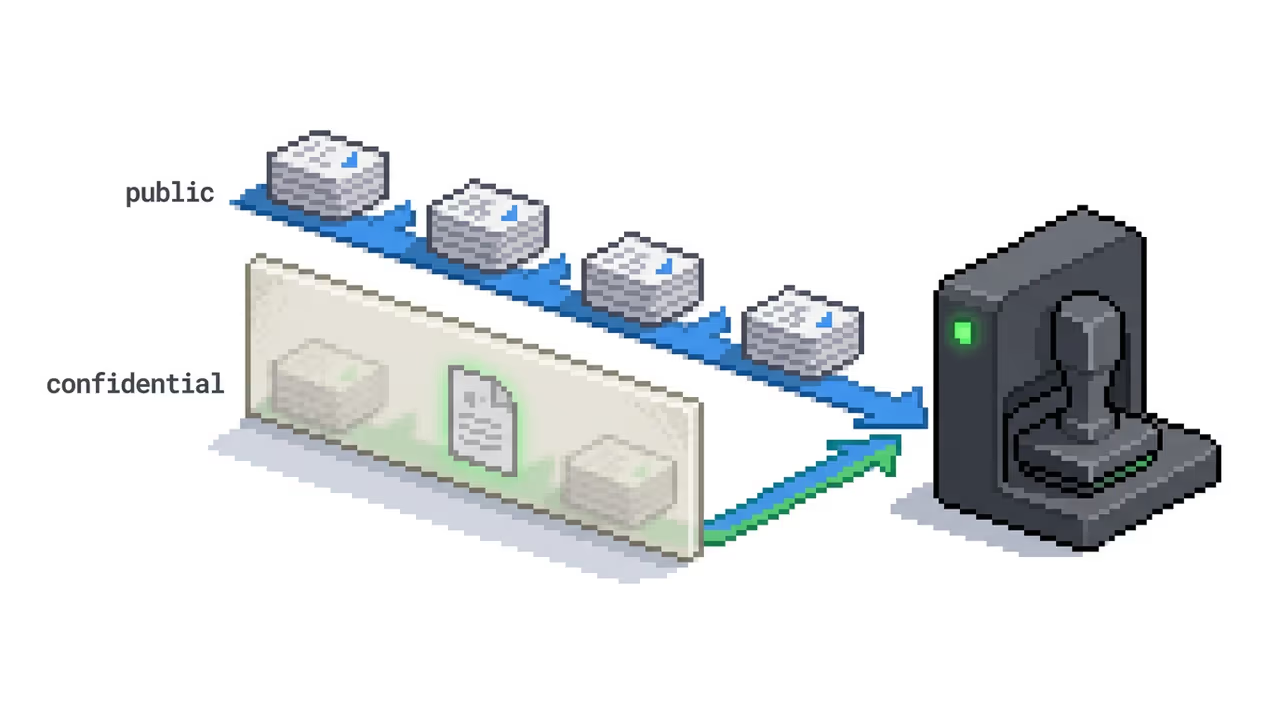
A confidential draft registration statement is a JOBS Act path that lets a company start SEC review privately, before committing to any of that disclosure.
Public S-1
financials + risks visible day one
Confidential DRS
private SEC review, nothing disclosed
The real financials only surface if OpenAI decides to proceed. A public S-1 typically appears at least 15 days before a roadshow. Until then, the draft sits with SEC reviewers and the company keeps every number in its pocket.
The tension underneath
The burn nobody can see in the filing
None of this is in the confidential draft, but it is the reason the draft exists.
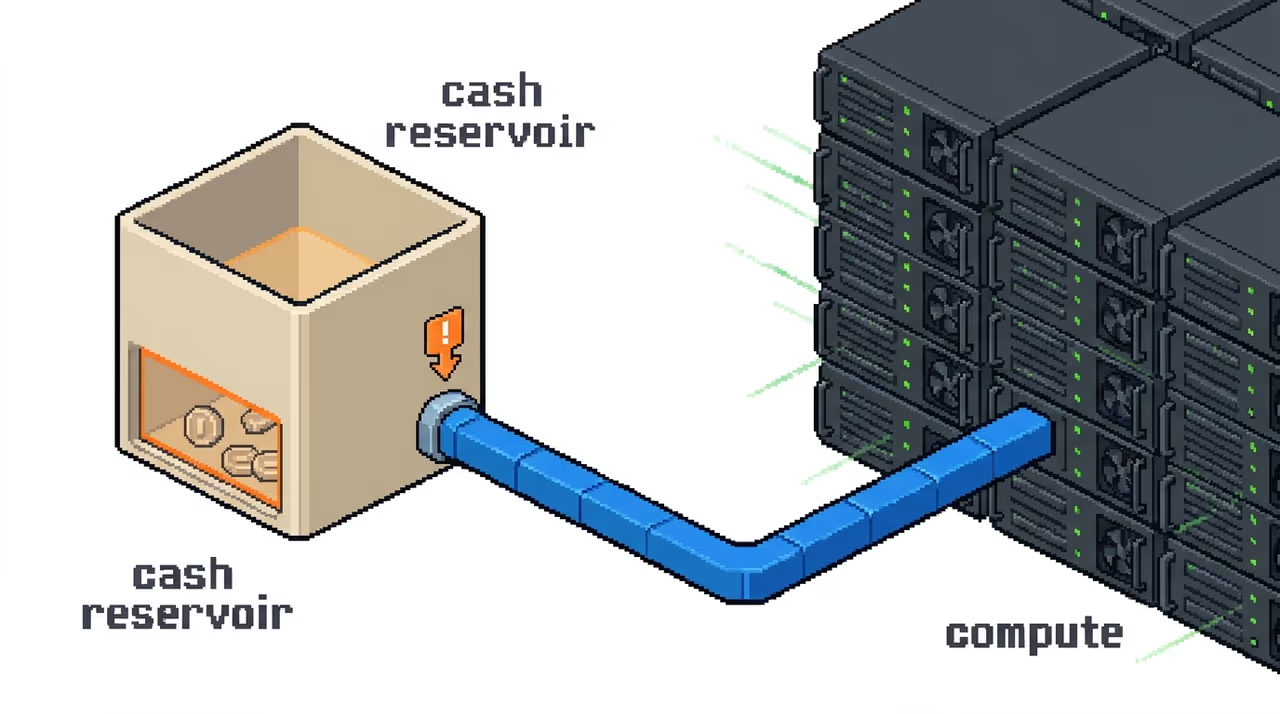
Per Wall Street Journal reporting (relayed via TechCrunch), OpenAI recently missed its own new-user and revenue targets in the sprint toward a listing, and CFO Sarah Friar reportedly voiced concern the company couldn't sustain its data-center spending.
  Compute spend (AI research)
  2028  ████████████████  ~$122B scale
  Cash burn
  2028  ██████████        ~$85B (WSJ)
  Positive cash flow
  2030  ─────── not expected before
The projection: roughly the size of its entire $122B March round spent on compute in 2028, a ~$85B burn that year even after doubling sales, and no positive cash flow until 2030. That is a financing appetite private markets may not keep feeding, which makes the public option worth keeping alive.
The race for scarce capital
Anthropic set the comp a week earlier
OpenAI didn't move in a vacuum. Anthropic disclosed its own move toward an IPO on June 1, a week ahead, and its numbers reframe the whole picture.
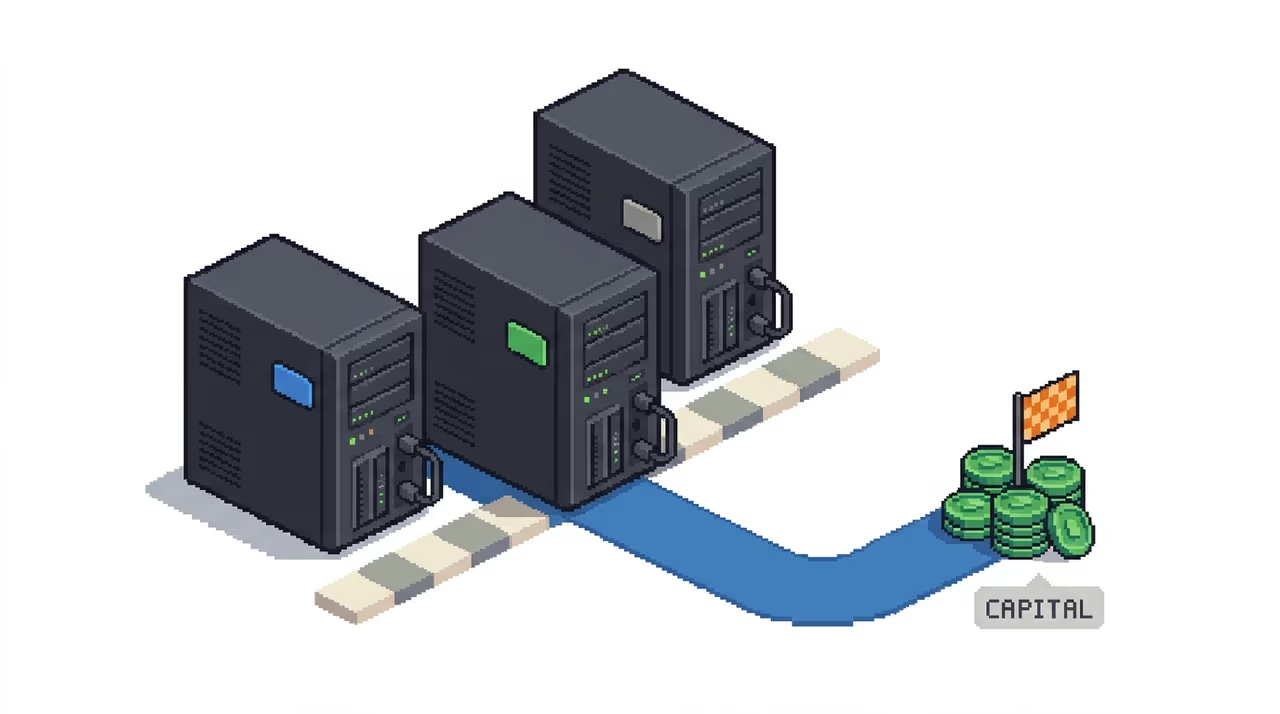
On secondary markets Anthropic surged toward ~$1 trillion, passing OpenAI's roughly $880B April read, while OpenAI's last private valuation sat at $852B.
- Jun 1 — Anthropic moves toward IPO (sets the valuation comp)
- Jun 8 — OpenAI confidential S-1 (keeps its options open)
- SpaceX roadshow, ~$1.75T (expected to list first)
Analysts frame it as a race for increasingly scarce AI capital: whoever lists first captures more of it, and Anthropic's disclosures become a valuation comp that constrains OpenAI's own pricing. By the NYSE OpenVC index cited by TechCrunch, Anthropic was up 123% YTD against OpenAI's 11.3%.
What actually follows
An option, not a commitment
The 2025 reorg into a public benefit corporation controlled by a nonprofit is what makes an IPO structurally possible at all.
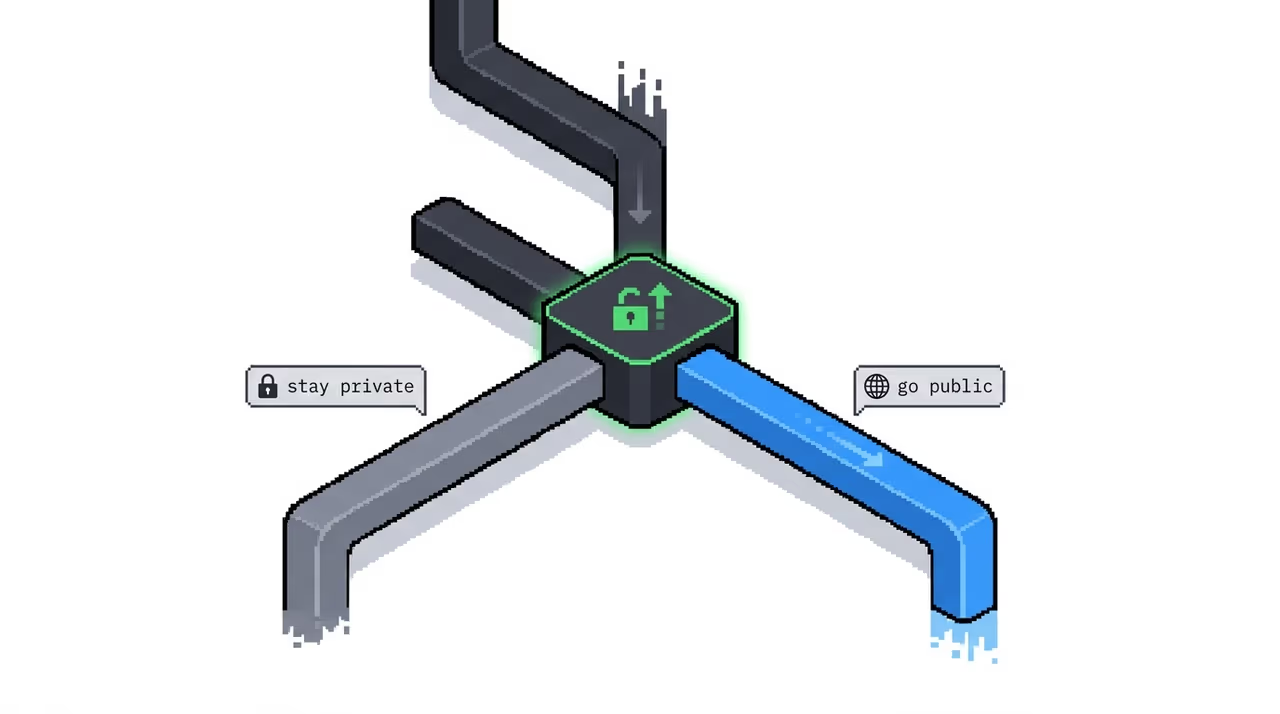
It also invites scrutiny: reconciling a nonprofit-controlled PBC with ordinary public shareholders is not a solved problem, and it is one reason OpenAI says staying private may be easier for now.
Confidential S-1
- Go public sooner
- Stay private, keep raising
So read the filing for what it is. Not "OpenAI is going public," but a company with a ~$85B annual burn ahead of it buying itself the ability to move fast if private capital tightens. The document reveals nothing by design; the decision to file it reveals the pressure.
The stakes
Why keep the option open
Why it matters
For a working engineer this filing changes little today: you can't buy the stock, and OpenAI's products don't shift because of it. What it signals is bigger. The leading AI labs now lean on public-market money to keep funding compute at a scale private investors may not sustain, and whoever lists first sets the valuation the rest are priced against. That race for capital shapes who can afford to build frontier models at all.
The short version
- OpenAI filed a **confidential draft S-1** under **Rule 135**, so it names no price, share count, or date, and none of that is public yet.
- The point is **optionality, not commitment**: a private SEC review that lets OpenAI list fast if it decides to, without disclosing anything now.
- The pressure behind it is a reported **~$85B** 2028 cash burn with **no positive cash flow until 2030**, none of which is in the filing.
- **Anthropic** moved a week earlier and set the valuation comp, turning this into a race for scarce AI capital where listing first matters.
Sources
- 1.OpenAI — Confidential submission of draft S-1 to the SEC
- 2.OpenAI confidentially files for IPO, prepping Wall Street for mega AI debut
- 3.OpenAI says it filed confidential IPO as it positions itself for AI arms race - CBS News
- 4.TechCrunch — Following Anthropic, OpenAI files confidentially for IPO
- 5.Fortune / AP — OpenAI files confidential SEC paperwork for IPO
- 6.OpenAI Stock IPO: Valuation, Timeline and Investment Options
- 7.OpenAI submits confidential IPO filing, timing and terms undecided
- 8.OpenAI IPO initial paperwork filed with SEC
- 9.OpenAI files confidential SEC paperwork for IPO, opening the door to a Wall Street debut | king5.com