Deep Dive · Issue 8
Inside Zig's Incremental Compilation Engine
Change one line, get a new binary in milliseconds. Here is the machinery that makes Zig rebuild only what actually moved.
The problem
Recompiling the world for a one-line change
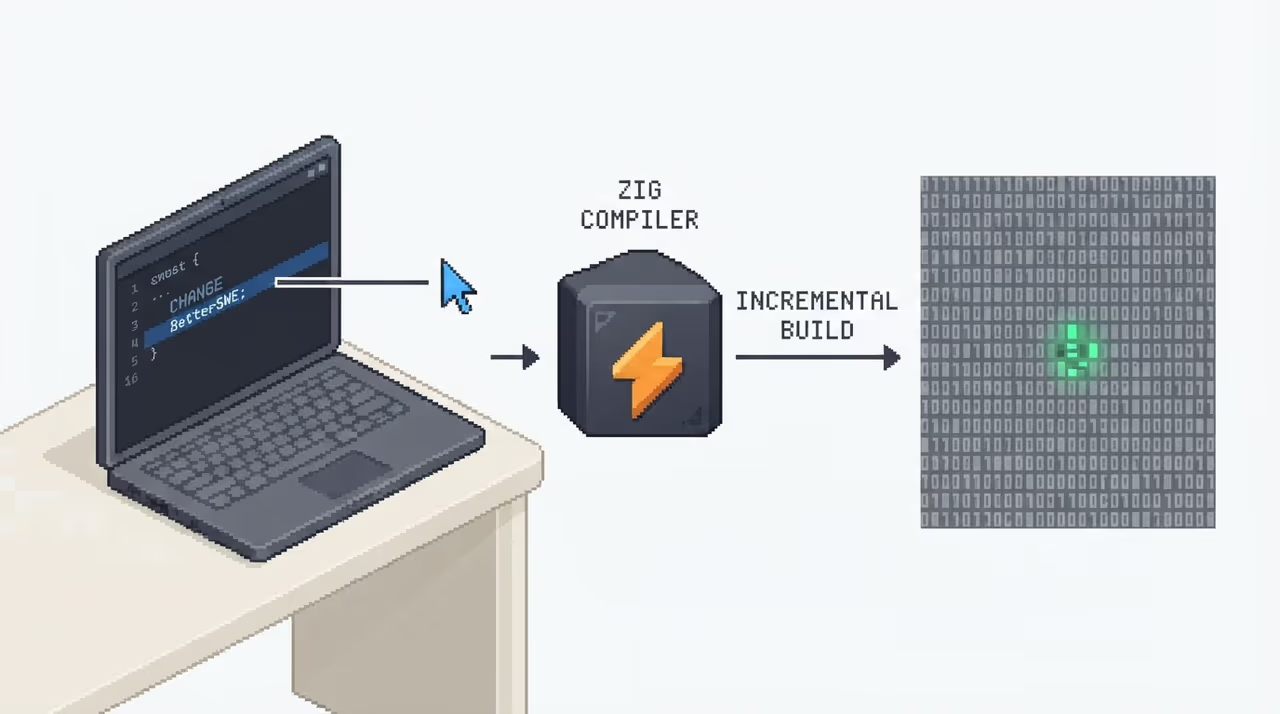
The usual compiler contract is brutal: touch one function and the toolchain re-parses your file, re-checks types, hands everything to an optimizer, and relinks the whole binary. For a large project that is seconds to minutes of work to reflect a change you could describe in a sentence.
Zig's goal is the opposite. The compiler is being rebuilt so that editing a line rebuilds essentially instantly, fast enough that a demo can recompile the Zig compiler itself on every keystroke. Getting there means the compiler has to know, precisely, what your edit did and did not affect.
Traditional
one edit → full re-analysis + relink
Incremental
one edit → re-check the changed unit only
That precision is not a feature you bolt on at the end. It reaches down into how the compiler stores every type, value, and declaration in memory.
The foundation
Everything is an index, not a pointer
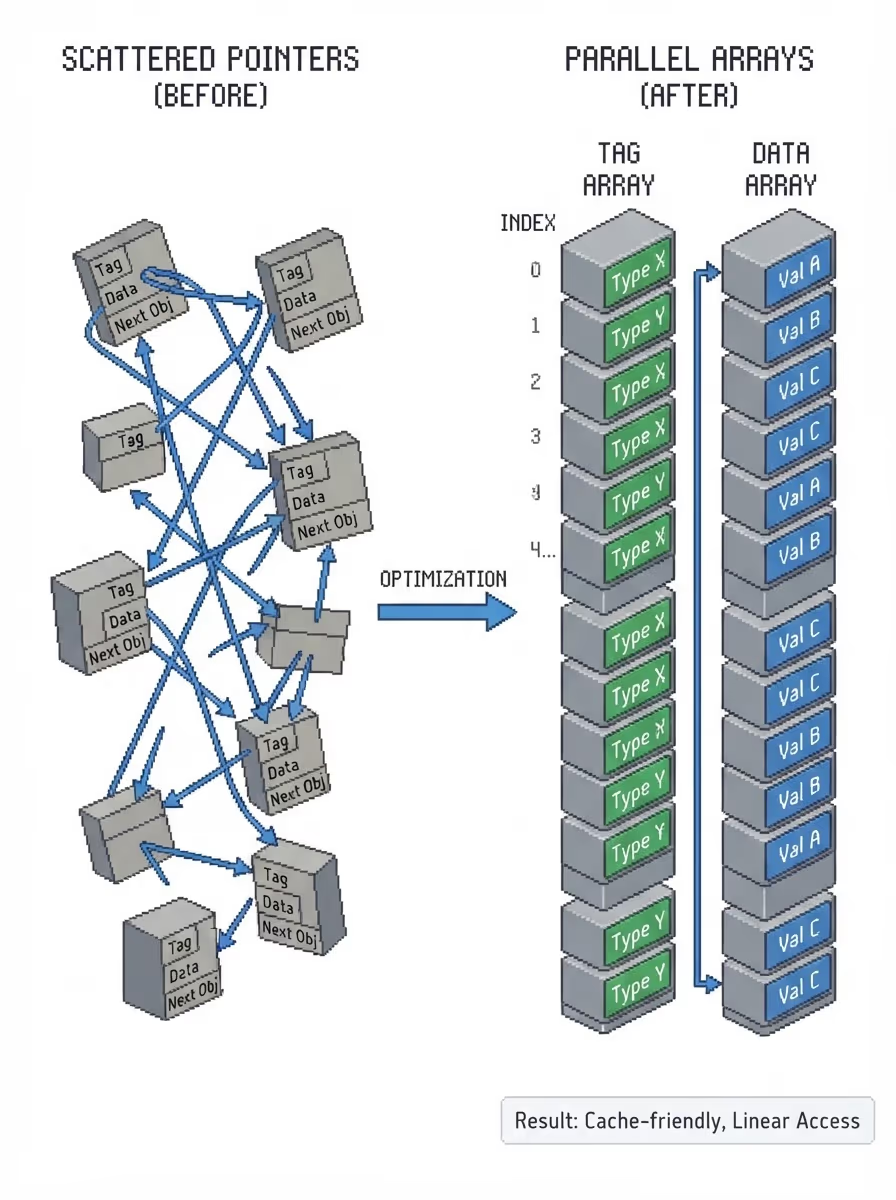
Zig's self-hosted compiler is built data-oriented. Instead of a graph of heap objects wired together by pointers, the compiler's core data lives in flat arrays, and everything refers to everything else by a small integer offset into those arrays. A declaration, a type, an AST node: each is a u32 index, not an address.
This started as a memory and speed play. Packing hot data into arrays keeps caches warm and shrinks the compiler's footprint, which is why the architecture is described as index-based from top to bottom. The payoff for incrementality is a side effect that turned out to matter more than the cache wins.
pointer world              index world
  ┌────┐   ┌────┐        types[]   [·][·][·][·]
  │Decl│──▶│Type│                       ▲
  └────┘   └────┘        Decl.type = 2 ─┘
  address = ???          index = 2 (stable, serializable)
An index is stable and serializable. You can write it to disk, load it next run, and it still points at the right thing, which is exactly what a compiler needs if it wants to remember what it knew last time.
Deduplication
The InternPool: one copy of every type
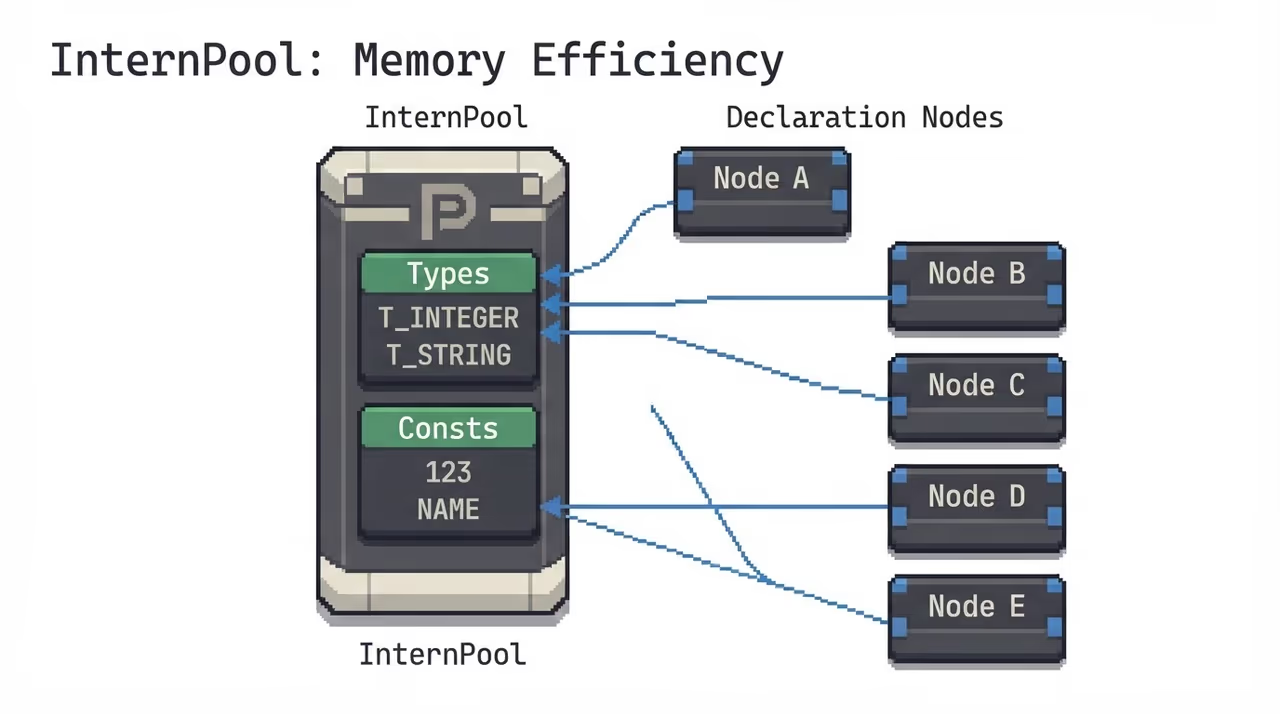
Sitting at the center is the InternPool, a single deduplicated table of every type and comptime value the program uses. The integer []const u8, the type bool, a struct layout you defined once: each exists exactly once in the pool, and every use is the same index.
Interning does two jobs at once. Type equality becomes an integer comparison instead of a structural walk, and the whole semantic state of a compilation collapses into a compact, addressable table. Because entries are keyed by content, re-analyzing an unchanged declaration lands on the identical index it produced last time.
If the same input maps to the same index, then a stable index is proof nothing changed.
That equivalence is the hinge. The compiler can compare this run's result for a declaration against the previous run cheaply, and if the index matches, it knows downstream work can be skipped entirely.
Knowing what changed
A dependency graph over declarations
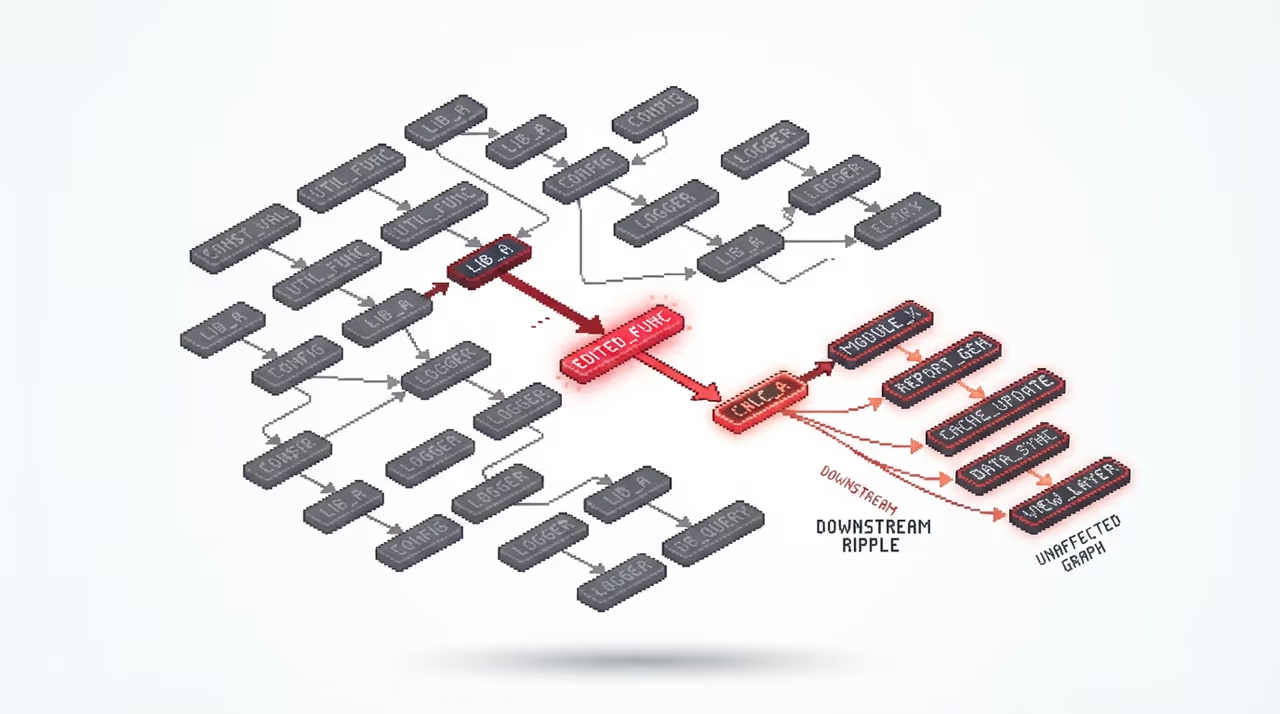
Incremental compilation lives or dies on granularity. Zig tracks dependencies at the level of individual declarations, not whole files, recording which decls read which types, call which functions, and depend on which comptime values.
When you edit, the compiler re-analyzes the changed declaration and checks its new result against the interned result from last run. If the index is identical, the ripple stops there. If it differs, only the direct dependents are marked dirty, and the wave propagates outward exactly as far as the change actually reaches.
edited fn
- caller A (re-check)
- caller B (re-check)
- unrelated (untouched)
A function whose signature and body reduce to the same interned form as before costs almost nothing, even if you retyped it. What propagates is semantic change, measured against the pool, rather than the crude fact that a file's bytes moved.
Emitting code
Skip LLVM, patch the binary in place
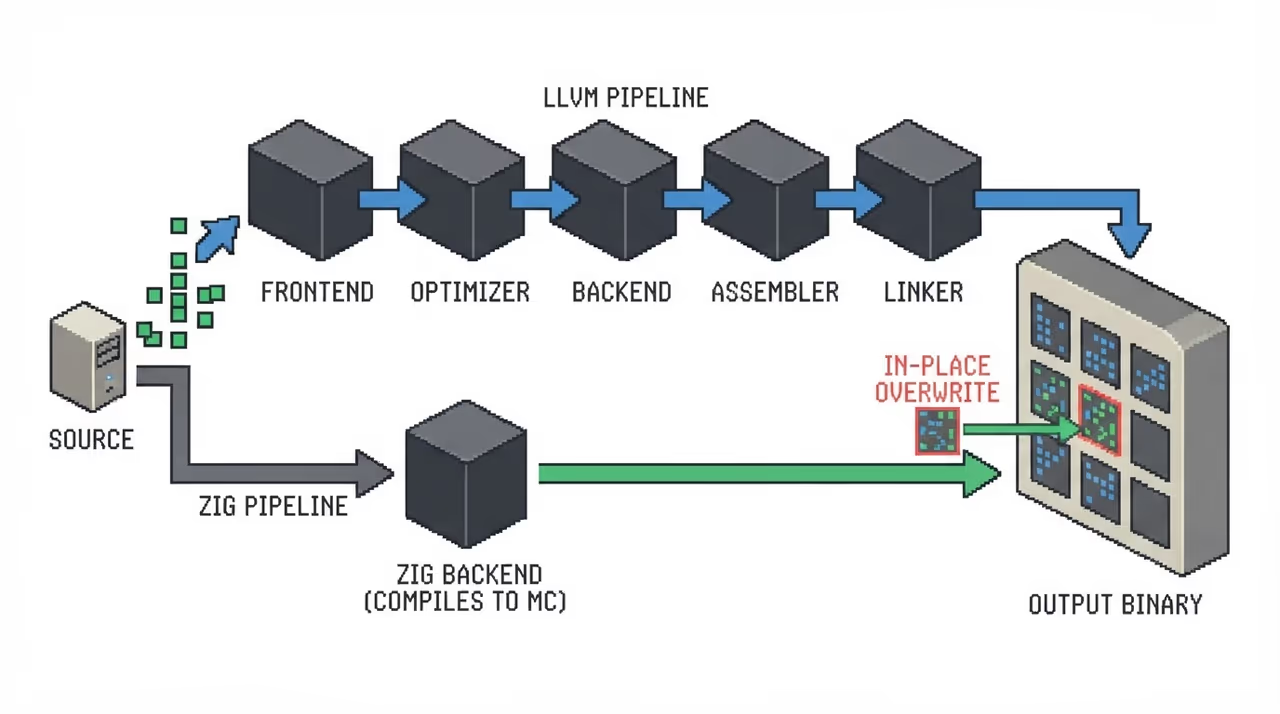
Re-checking one function is pointless if you then hand the whole module to LLVM and relink. So Zig grew its own backends. The self-hosted x86_64 backend is now the default for debug builds, emitting machine code directly with no LLVM in the loop.
That direct control is what unlocks the last step: in-place binary patching. Each function occupies a slot in the output with a little slack around it, so when one function changes, the linker can overwrite just that region and fix up the references to it, instead of rebuilding the executable from scratch.
output binary
┌──────────┬──────────┬──────────┬──────────┐
│  main()  │  parse() │  emit()  │  free()  │
└──────────┴────▲─────┴──────────┴──────────┘
                │ only parse() changed
└── overwrite this slot + relocs, keep the restNow the pieces line up end to end. An edit invalidates a few declarations, re-analysis reuses interned results for everything else, and the backend patches only the machine code that genuinely differs.
Where it stands
Fast enough to change how you work
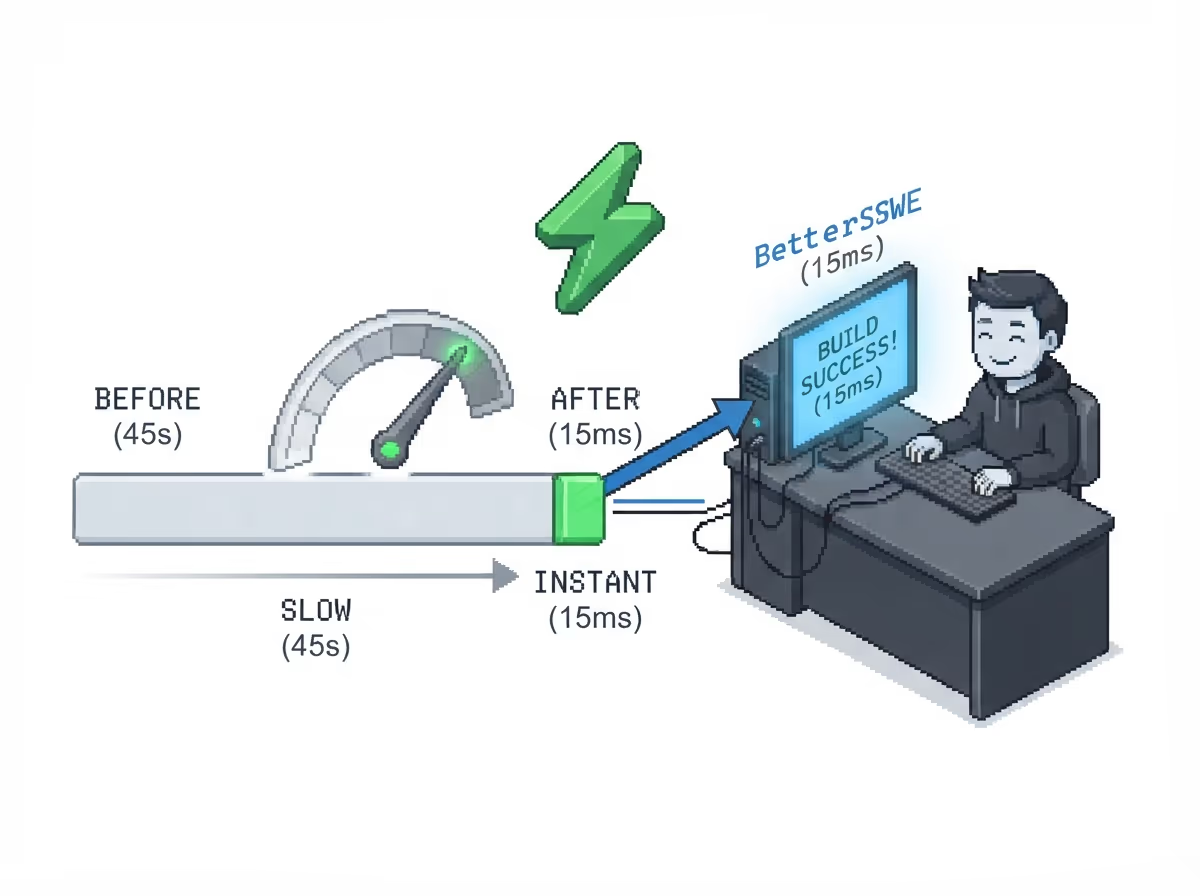
The direction is already visible in day-to-day builds. Dropping LLVM from the debug path and reusing prior work has made Zig builds measurably quicker, and the self-hosted backend is the piece doing most of that heavy lifting.
The pieces are still maturing behind a flag and across releases rather than being fully wired into every tool yet, which is why editor integrations are still catching up to it. The architecture, though, is committed: index-based data, an intern pool, decl-level dependencies, and native codegen were all chosen so that this would be possible.
When it lands, the loop stops feeling like compilation. You save, and the binary that was running a moment ago has your change in it, because almost nothing else was touched.
The payoff
Speed designed in, not bolted on
Why it matters
Instant rebuilds are the visible result, but the interesting part is that Zig had to redesign its entire compiler around them: flat index-addressed data, a content-keyed intern pool, and its own machine-code backends. It is a concrete example of how a build-speed goal, taken seriously, dictates architecture all the way down. For anyone building compilers or long-running analysis tools, it is a working blueprint for making incremental work cheap by construction rather than by cache hacks.
The short version
- Zig stores compiler data in **flat arrays addressed by integer indices**, so state is stable and serializable across runs.
- The **InternPool** deduplicates every type and value; a matching index is proof a declaration didn't change.
- Dependencies are tracked **per declaration**, so an edit invalidates only its real dependents.
- The **self-hosted x86_64 backend** (now default in debug) emits machine code directly and **patches functions in place** instead of relinking.
- Together these turn a one-line change into a near-instant rebuild rather than a full recompile.
Sources
- 1.Zig Compiler Internals - Andrew Kelley
- 2.Architecture – Zig wiki | Factory
- 3.Data-Oriented Design Revisited: Type Safety in the Zig ...
- 4.Provide a configuration option to use incremental compilation for build ...
- 5.Incremental compilation instantly rebuilds the Zig ...
- 6.Devlog ⚡ Zig Programming Language
- 7.Self-hosted x86 back end is now default in debug mode
- 8.[#36] Zig Roadmap 2024 - Andrew Kelley - Media - Ziggit
- 9.Zig Builds Are Getting Faster
- 10.Incremental compilation · Issue #21165 · ziglang/zig
- 11.Devlog