System Design · Issue 7
Inside Fireworks AI's Stack for Serving Kimi K3 at SOTA Cost and Latency
A 2.8-trillion-parameter open model only beats the closed APIs if you can serve it fast and cheap. Here is how Fireworks makes that case.
The bet
Serving a 3-trillion-parameter model cheaply enough to matter
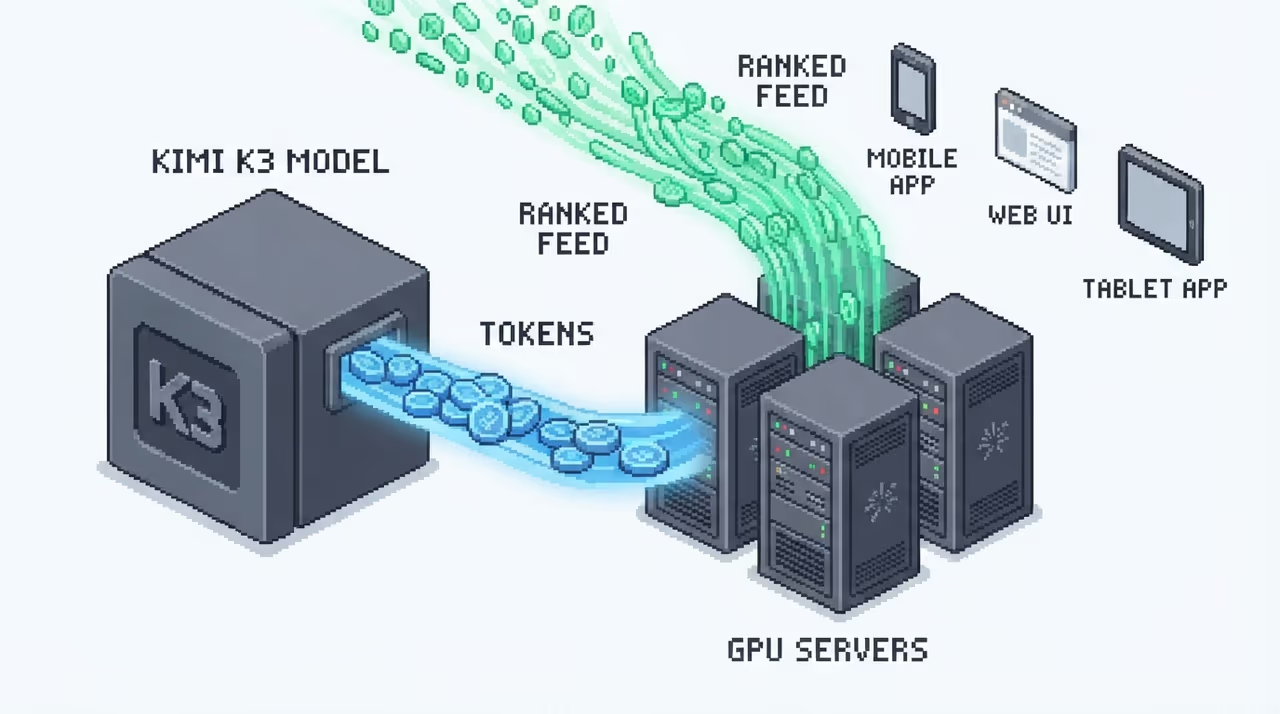
Kimi K3 is a 2.8-trillion-parameter open-weight model. For Fireworks, hosting it is only worth it if they can serve it fast and cheap enough that a customer would route real agentic work through K3 instead of defaulting to a closed API. That is the whole business: Fireworks says it moves over 40 trillion tokens a day, most of it on models specialized on customer data.
Open-weight K3
hosted, cheap, you own it
Closed API
default, pricier
The company raised a $1.5B Series D at a $17.5B valuation on the back of $1B+ in ARR, so the pitch has money behind it. The operational problem is less a single latency war story than a positioning argument: prove that a well-served open model can match the frontier at a fraction of the cost.
The model
What Fireworks actually has to keep hot
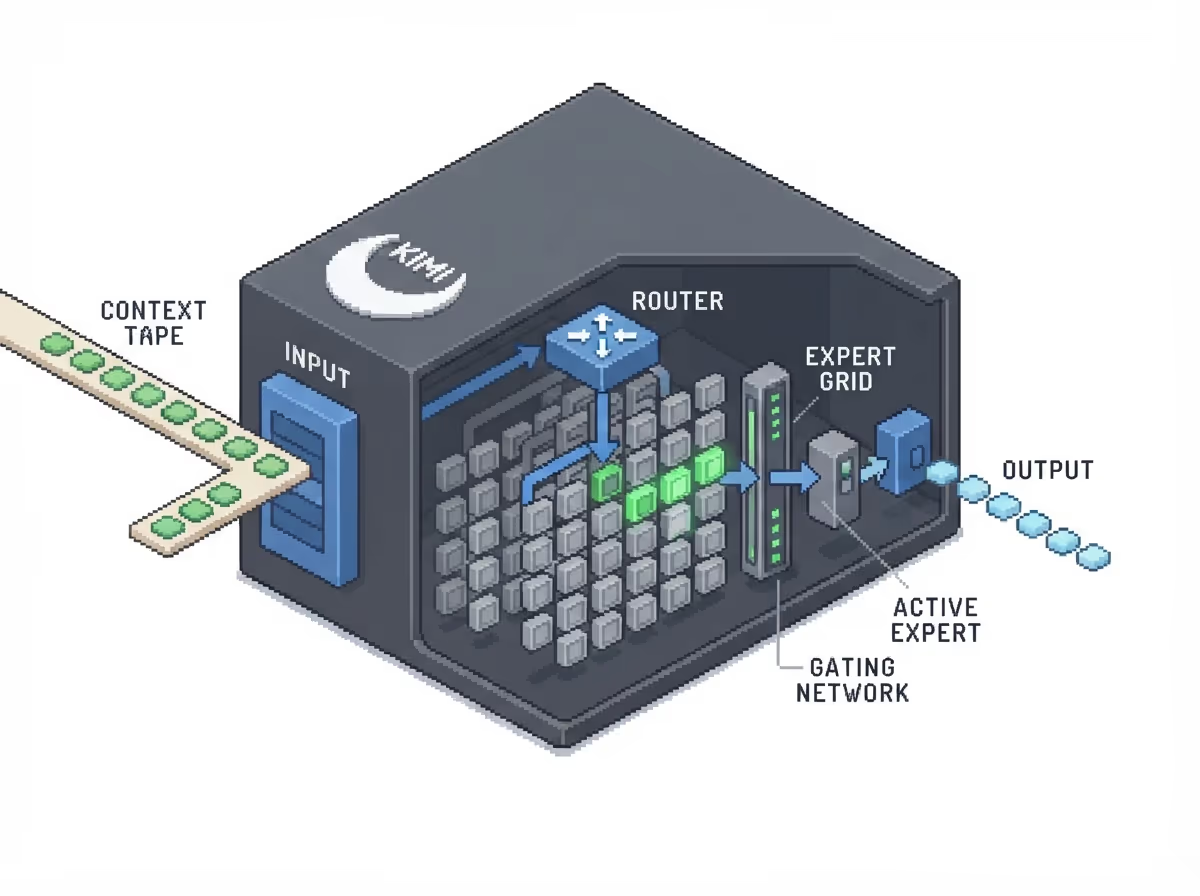
K3 packs its 2.8T parameters behind a Mixture-of-Experts design, so only a slice of experts fire on any given token. It runs a hybrid linear-attention scheme Moonshot calls Kimi Delta Attention, accepts image input, and holds a context window of roughly 1.04M tokens. That long window is the reason the serving economics later hinge on caching.
  input     $3.00 / 1M tokens
  cached    $0.30 / 1M tokens
  output   $15.00 / 1M tokens
  ─────────────────────────────
  Fast tier   ~+50%  (lower latency)
  US region   ~+10%  (data residency)
Base serverless pricing is $3.00 / 1M input, $0.30 cached input, and $15.00 output. Vercel's gateway lists two variants layered on top: a Fast tier at roughly 50% more for lower latency, and a US inference region at about 10% more for data residency.
The study
K3 versus Claude Fable 5, same harness
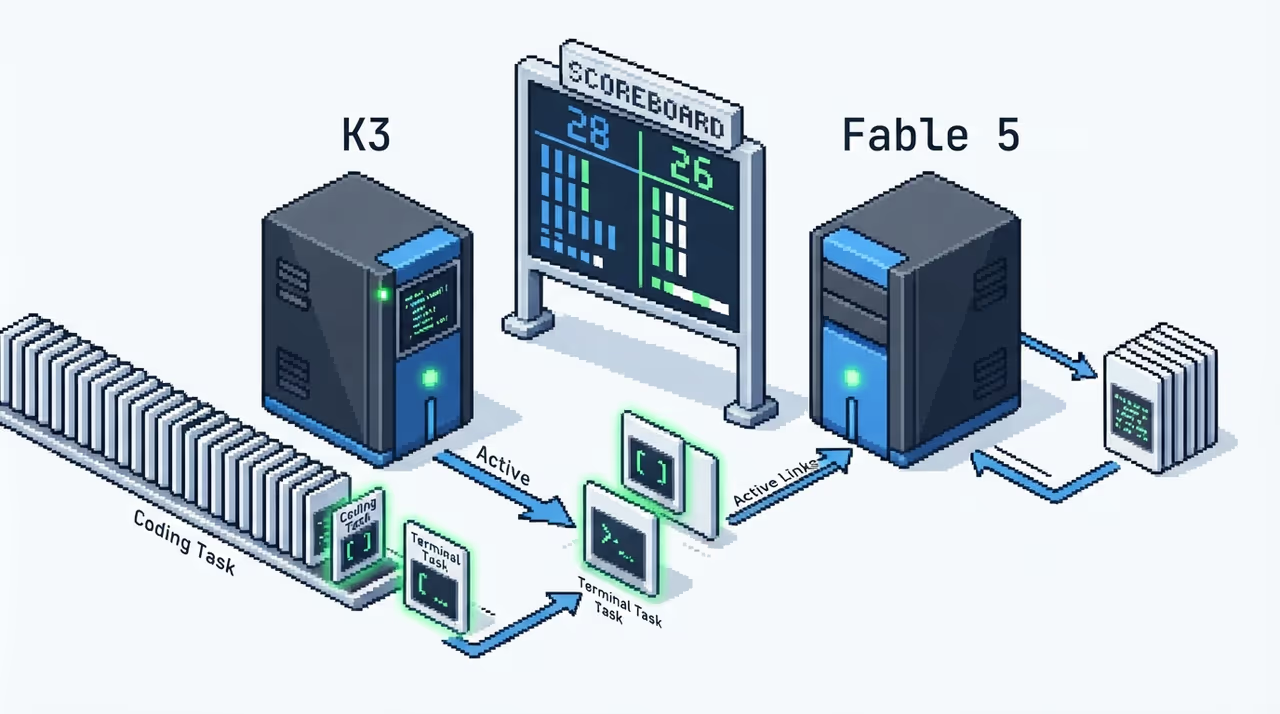
Fireworks ran 1,030 agentic tasks through both K3 and Claude Fable 5 on an identical harness, spanning SWE bug fixes, long terminal ops, algorithmic puzzles, multi-language coding, and lawyer-graded legal work. On the 460 SWE-bench-style tasks the two tied almost exactly: K3 at 92.4% against Fable's 92.6%.
1,030 tasks
- SWE · 460
- Multi-lang · 225
- Legal · 120
- Algo · 100
- Terminal · 89
The aggregate tie hides a split in strengths. K3 pulled ahead on symbolic math, dev tooling, and security, solving terminal tasks Fable never cracked, like a 7z hash and FEAL cryptanalysis. Fable led on web work, data-viz, and broad language coverage, with K3 drawing even on JavaScript and Rust.
The economics
More turns, still cheaper
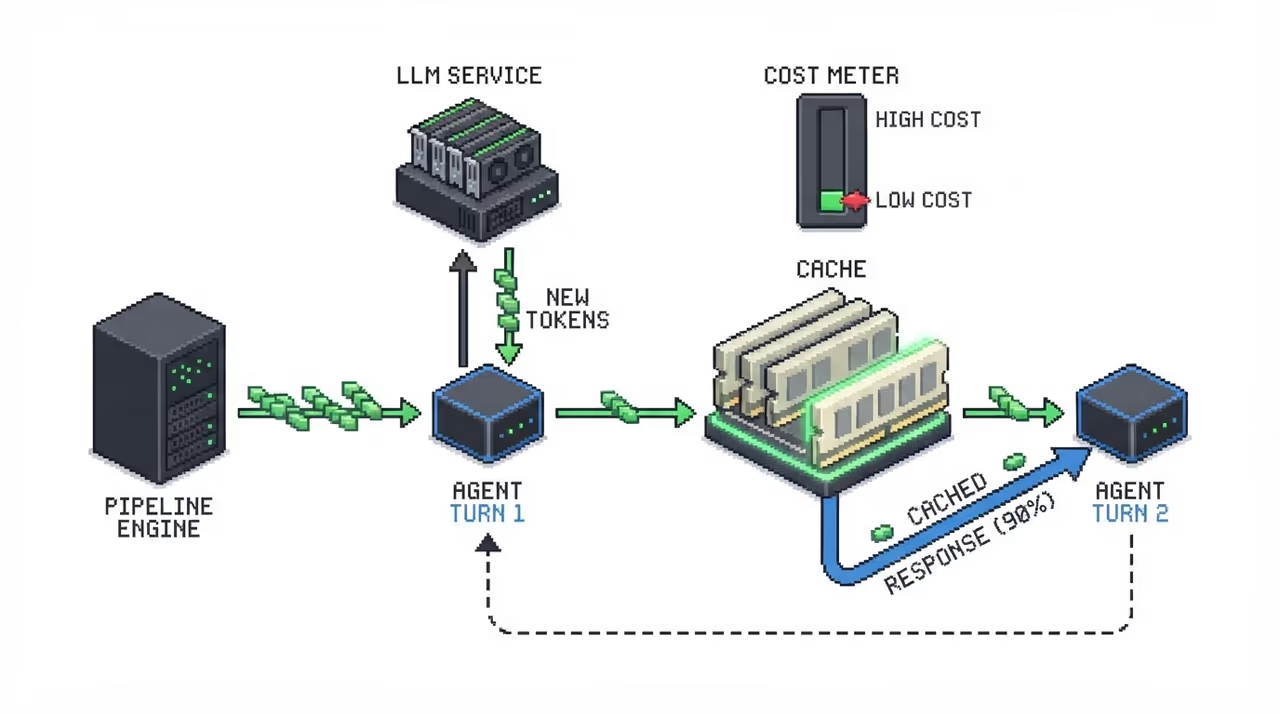
On SWE tasks K3 was the heavier spender by raw count: about 55 turns and 1.3M tokens per task against Fable's ~21 turns and ~130K. It still came out cheaper overall, because most of that context was served from cache at $0.30 rather than reprocessed at $3.00. On long terminal tasks the pattern flips, with Fable spiraling up to 64 turns and sometimes timing out.
The 50x savings is a hindsight ceiling, not a router you can deploy.
A hindsight-optimal "oracle" router picked K3 for 72 to 96% of traffic depending on category, with cost savings reaching up to 50x in the best case. That number is explicitly a theoretical ceiling: a real router has to predict success before running a task, and Fireworks profits from every K3 token, so treat the study as directional rather than settled.
The reality check
Fast at the front, uneven at the tail
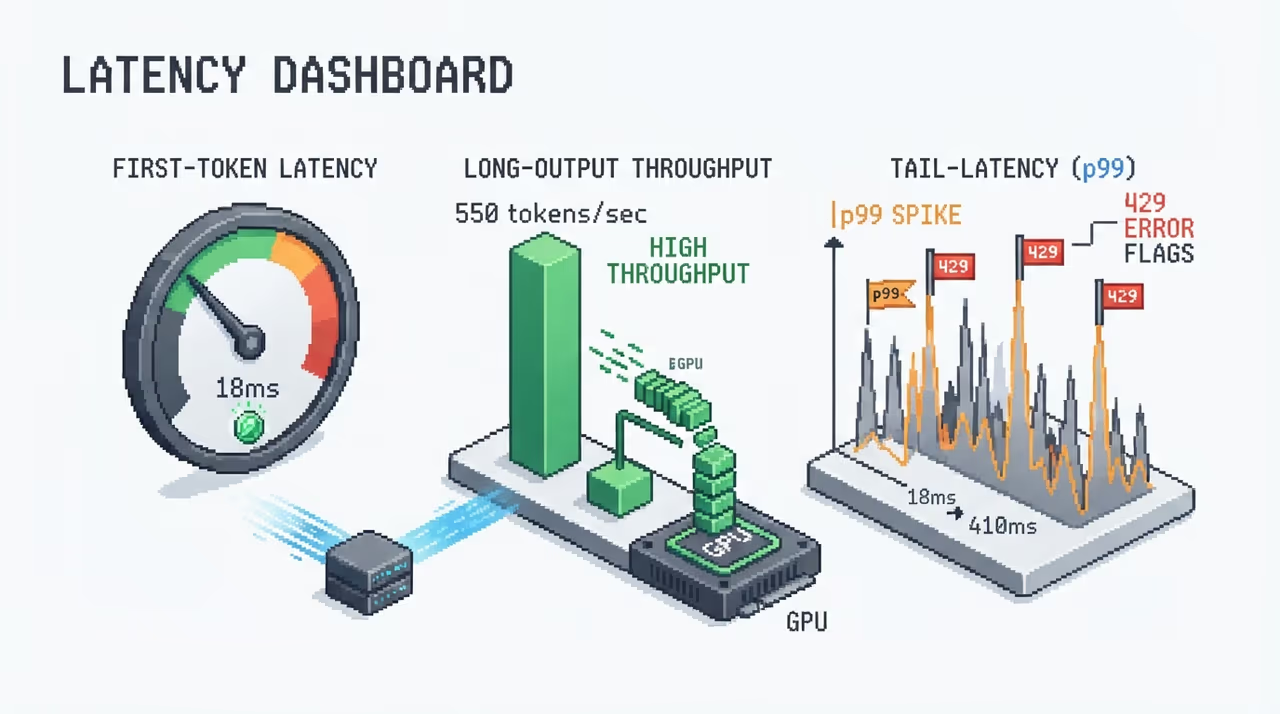
Fireworks markets K3-family serving on speed, citing Artificial Analysis figures like up to 200 tok/s on the K2.5 line and being 76% faster than the next GPU provider. Independent tests back the direction: DeepInfra measured the fastest time-to-first-token (0.71s) of nine providers, at 69.3 tok/s.
long-output throughput   ▇▇▇▇▇▇▇▇  165.7 tok/s  (~2x rivals)
time-to-first-token      ▇         0.71s  (fastest of 9)
short-form p99           ▇▇▇▇▇▇▇▇▇▇  10.7s  (13x the median)
short-form error rate    ▇▇▇        23%  (all HTTP 429)
One independent run confirmed Fireworks dominates on sustained output at 165.7 tok/s long-form, roughly 2x a rival, but also caught a 23% error rate from HTTP 429 rate limiting and a short-form p99 of 10.7s, more than 10x the median. The serving stack looks tuned for long, batched generation, and pays for it in tail consistency under bursty request patterns.
The product angle
Serving one base, many adapters
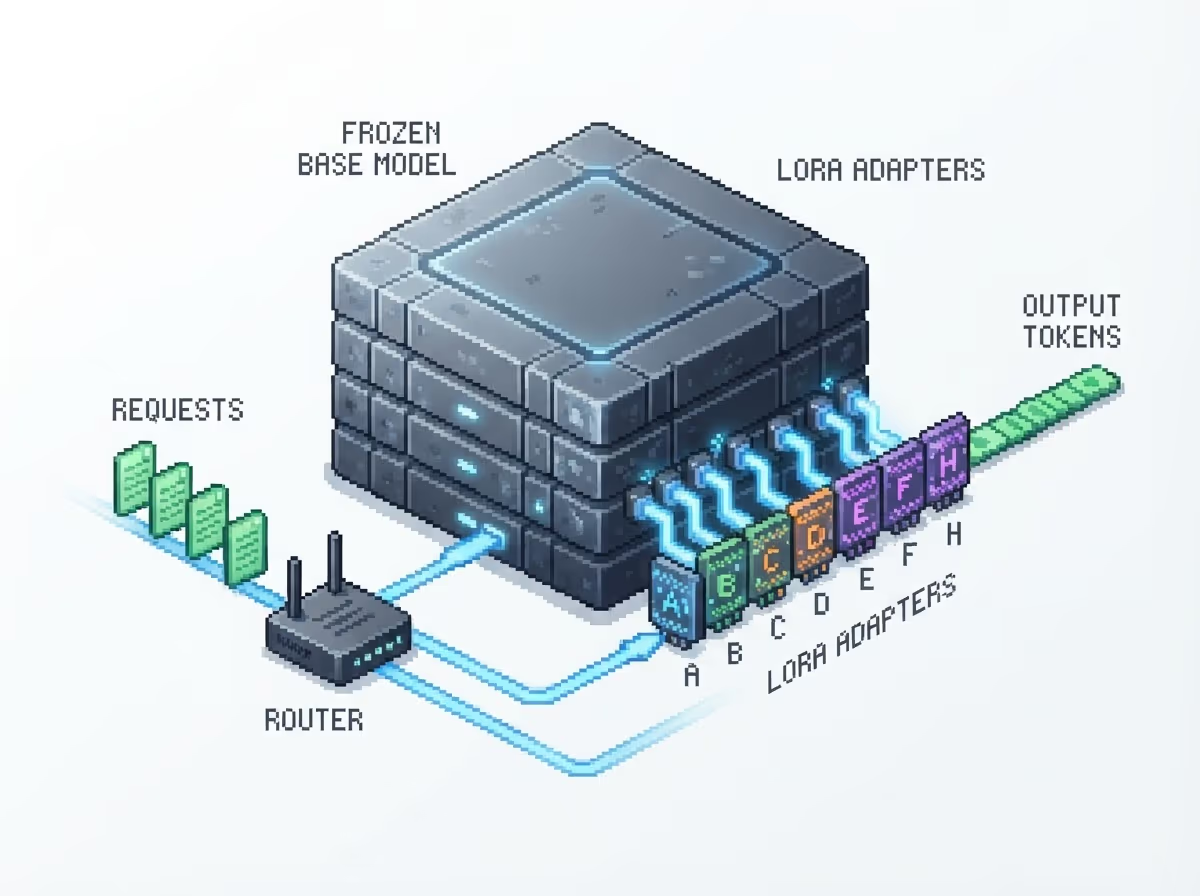
The one place with real mechanism detail is post-training: K3 supports LoRA training and serving through Fireworks Serverless Training, in private preview. Instead of fine-tuning all 2.8T parameters, you train small adapters and let the base stay frozen and shared.
Live merge
one adapter folded in, full base speed
Multi-LoRA
many adapters, routed per request
Two serving modes fall out of that. Live merge folds a single adapter into the base at deploy time, so it runs with no per-request overhead. Multi-LoRA keeps many adapters live on one deployment and routes each request to the right one. That is how you host a fleet of customer-specialized K3 variants without paying for a fleet of 2.8T copies.
The bottom line
Cheap frontier only if the tail cooperates
Why it matters
Fireworks is trying to prove that a well-served open model is a real substitute for the closed frontier, not a discount version of it. The routing study and the speed benchmarks say the ceiling is genuinely there: near-tied accuracy at a fraction of the cost, and best-in-class first-token latency. The catch surfaces in production, where tail latency and rate-limit errors decide whether that ceiling is reachable, so teams routing agentic traffic should test their own burst patterns rather than trust the headline numbers.
The short version
- **Kimi K3** is a 2.8T-parameter open MoE model with a ~1M-token context, served by Fireworks at $3/$0.30/$15 per 1M tokens.
- Fireworks' study put K3 in a near-tie with Claude Fable 5 (92.4% vs 92.6% on SWE tasks) while claiming up to **50x** cost savings, but that figure is a hindsight ceiling, not a deployable router.
- Long-context caching is why K3 stays cheaper even when it burns more turns and tokens per task.
- Independent benchmarks confirm the strengths, **0.71s TTFT** and **~165 tok/s** long-form, but also show a 23% rate-limit error rate and a 10.7s short-form p99.
- **Multi-LoRA** serving lets Fireworks host many customer-tuned K3 variants on one shared 2.8T base.
Sources
- 1.Kimi K3 and Kimi K3 Fast with ZDR and US-based providers now on AI Gateway - Vercel
- 2.Kimi K3 + Fable 5 Routing Study — Fireworks AI | explainx.ai Blog | explainx.ai
- 3.Kimi K3 API & Playground
- 4.Fireworks - Blog
- 5.Fireworks AI
- 6.Fireworks AI - Fastest Inference for Generative AI
- 7.Kimi K2.6 API Benchmarks: Latency, TPS & Cost Analysis ...
- 8.Highlights by Fireworks (@FireworksAI_HQ) / X
- 9.Kimi K2.5 Is Live on Fireworks: Vibe Coding, Agents, and Full-Parameter RFT
- 10.Medium