News · Issue 19
How One Redis Config Broke GitHub Actions
A default Redis client setting meets a CI startup race, and the error message tells you exactly what to fix.
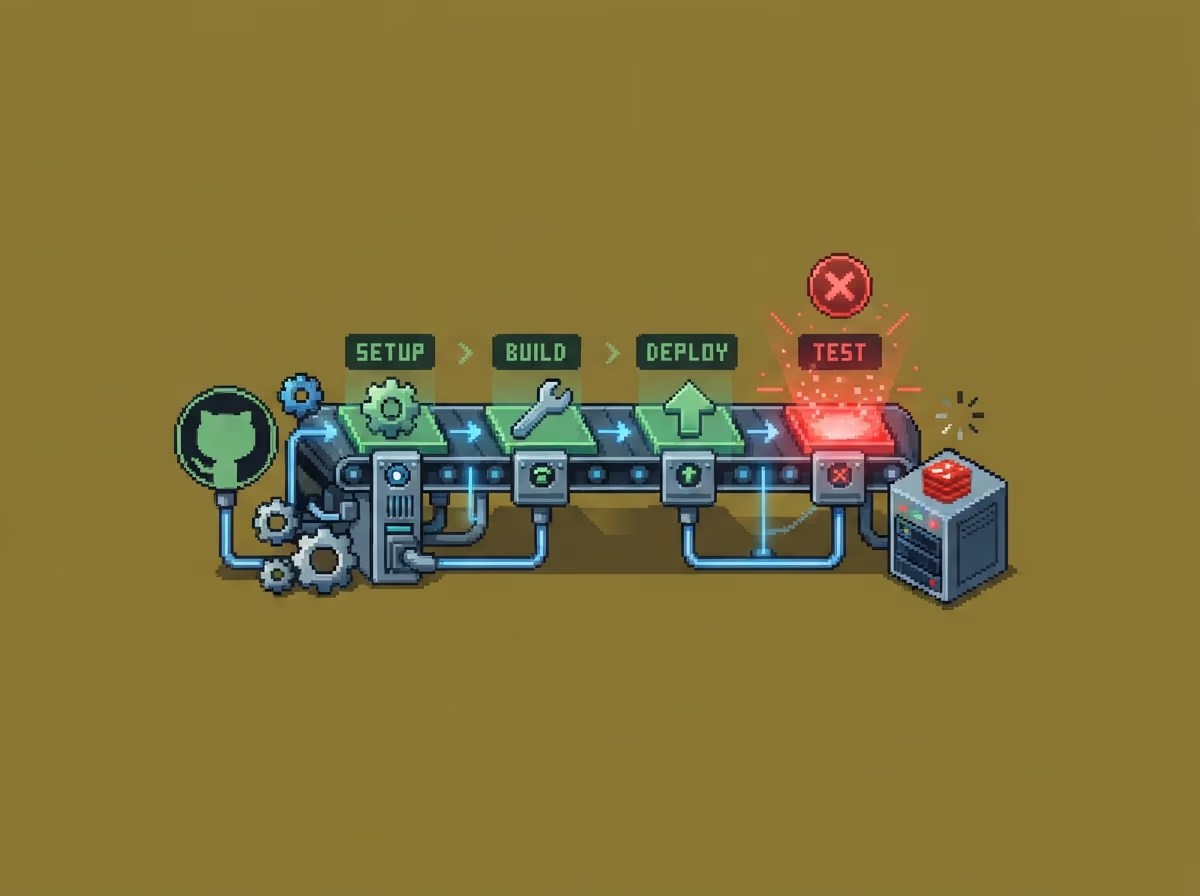
The failure
A Config That Throws on First Contact
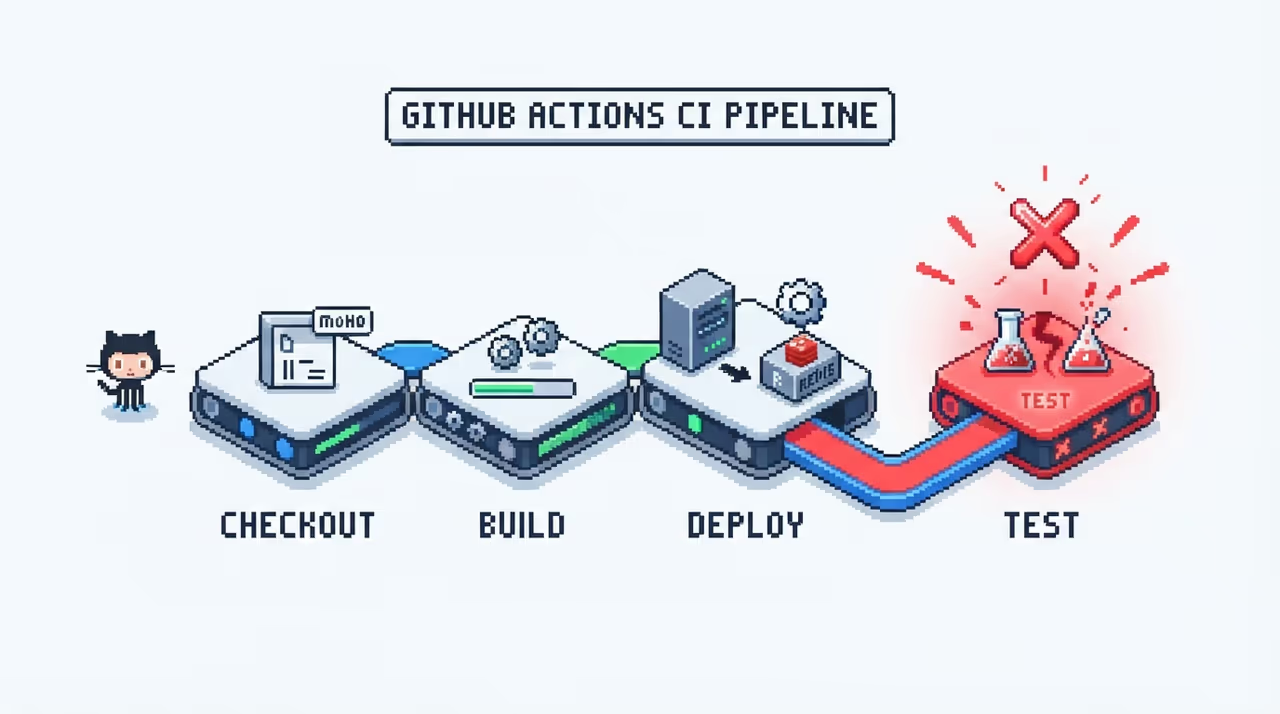
StackExchange.Redis ships with a config called AbortOnConnectFail set to true by default. When the initial TCP connection to Redis fails for any reason, the client throws a RedisConnectionException and the connection object is never returned. The error message itself spells out the fix: to create a disconnected multiplexer, disable AbortOnConnectFail.
It was not possible to connect to the redis server(s); disable AbortOnConnectFail. SocketFailure on PING
In a GitHub Actions workflow, Redis runs as a service container started from the Docker Hub redis image. There is a startup window before Redis accepts connections, and if a test suite hits that window, the connection attempt fails. With AbortOnConnectFail=true, that failure is permanent for that multiplexer instance.
The container side
Health Checks Gate the Startup Window
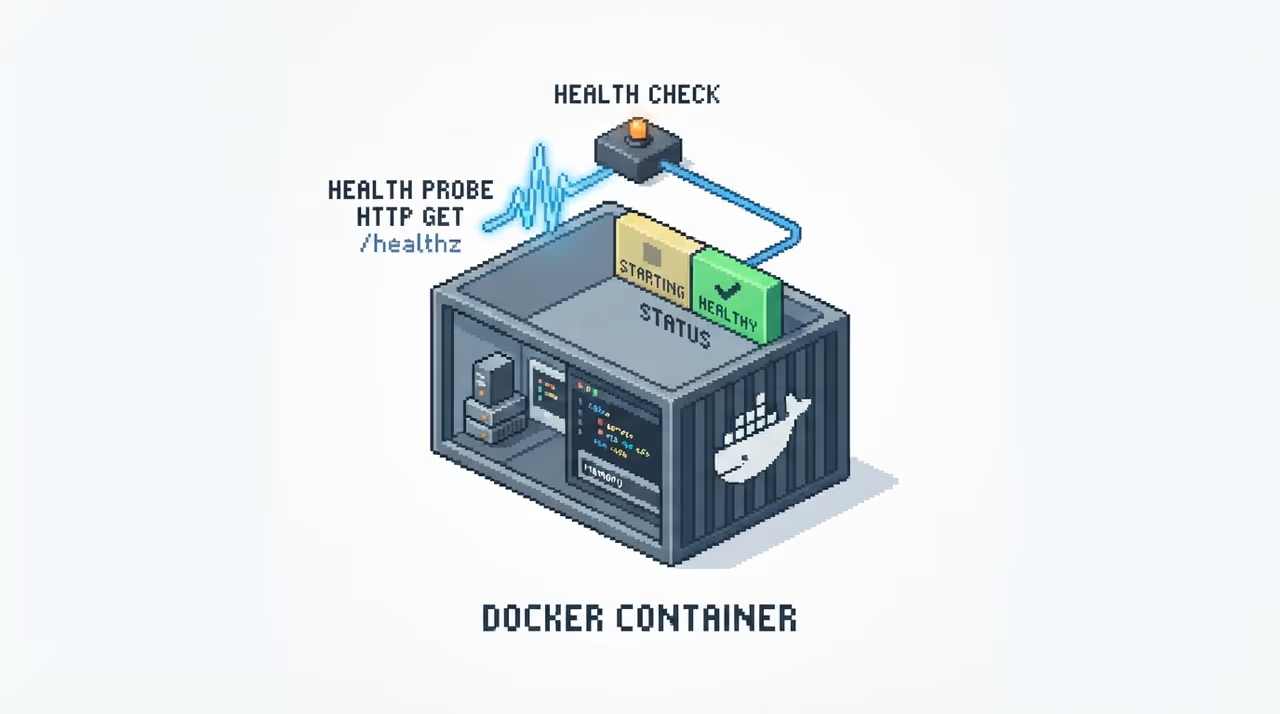
GitHub's own docs show the mitigation: Docker health-check options on the service container definition. The config runs redis-cli ping at a 10s interval, with a 5s timeout and 5 retries. GitHub Actions waits for the container to report healthy before starting any job steps.
options: >-
  --health-cmd "redis-cli ping"
  --health-interval 10s
  --health-timeout 5s
--health-retries 5Without those health checks, there is no gate. Steps proceed the moment the container is created, not when Redis is ready. The first test that tries to connect gets Connection refused or SocketFailure on PING. A Rails team hit a parallel version of this: their Postgres service container exited on startup while Redis ran fine, and only an SSH debug session revealed the container had crashed.
The client side
What AbortOnConnectFail Actually Does
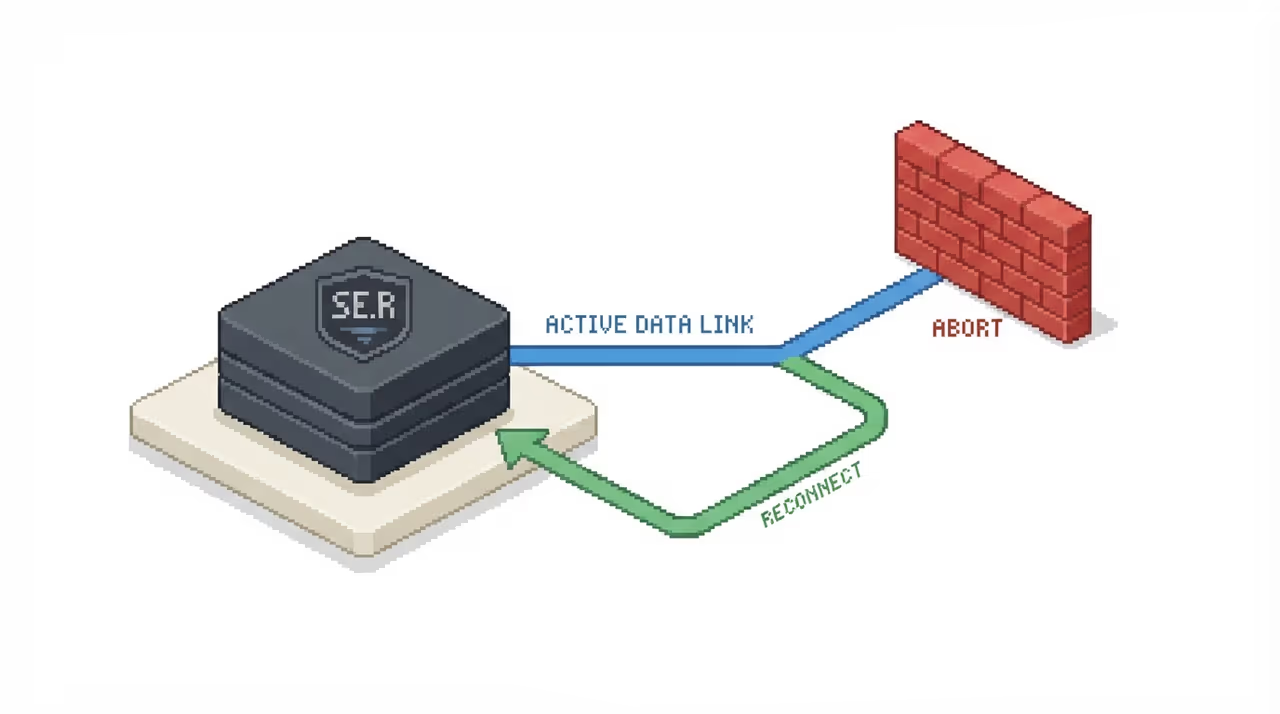
When AbortOnConnectFail=true, the constructor throws on any initial connection failure and never returns a multiplexer. Set to false, it returns a disconnected object that reconnects in the background, so individual operations fail instead of the whole connection. One team saw 7 failures over 12 hours at 1,000 to 2,000 req/min before flipping the flag; Azure had already shipped false as its managed-Redis default while the client kept true.
true (default)
throws immediately, multiplexer never created
false
returns disconnected multiplexer, reconnects lazily
The default makes sense for a long-running app server with a stable Redis endpoint: a connection failure there probably means something is genuinely wrong. In CI, the Redis instance is seconds old and still initializing, and a transient failure during that window should not be fatal.
The fix
Two Changes That Stop the Flakes
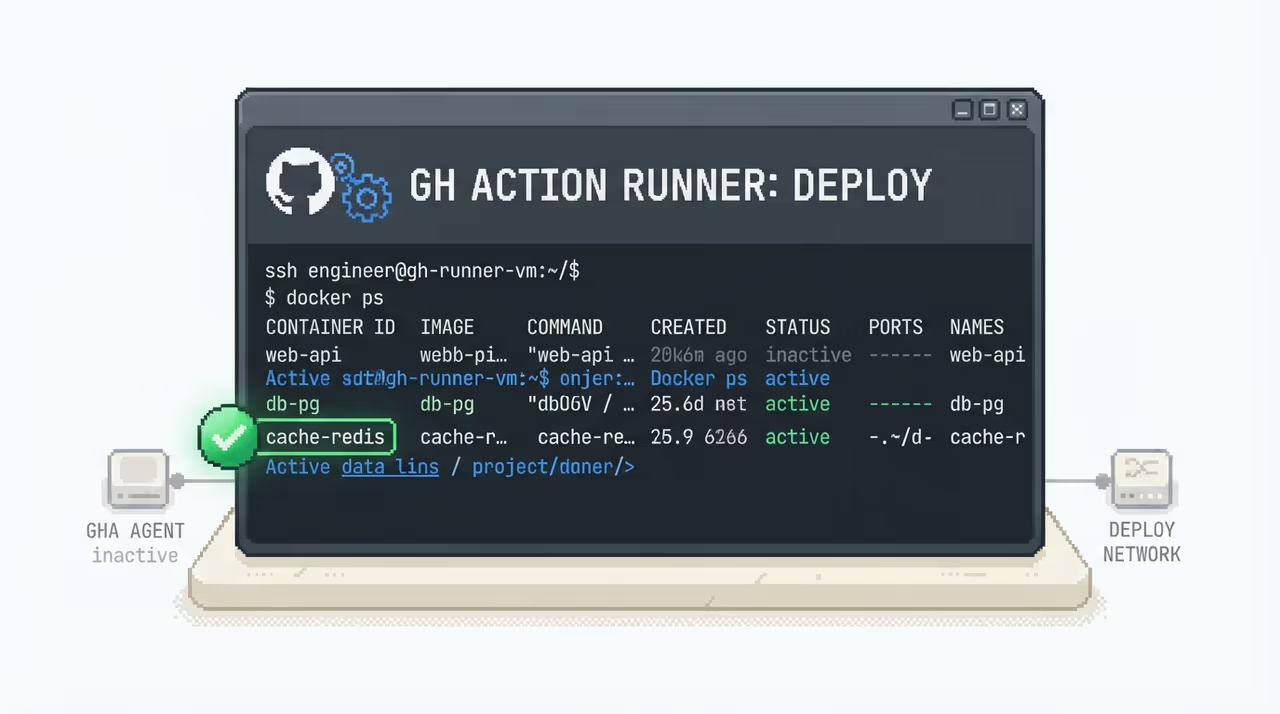
The fix is two-sided. On the container side, the health-check options gate step execution on Redis readiness. On the client side, setting AbortOnConnectFail=false lets the multiplexer survive the startup window and reconnect lazily. Together, they turn a hard failure into a brief delay.
Debugging a service container that won't connect
When a service container fails silently, mxschmitt/action-tmate@v3 opens an SSH session on the runner. Add it as a step before your tests, and GitHub Actions prints a hostname you can SSH into.
Once connected, docker ps -a shows every container including exited ones, and docker logs <container> reveals startup crashes. One team found their Postgres container had exited with code 1 while Redis ran fine, visible only through this method.
The same race exists for any service container. Postgres, MySQL, RabbitMQ: they all need a health check, and the client library needs to tolerate a brief startup window. Redis is the one where the default config makes the race fatal.
Wrap-up
Two Levers, One Race
Why it matters
The AbortOnConnectFail default is a reasonable assumption for a production app server that breaks the moment you move Redis into a container that takes a second to boot. CI environments are the worst case for this default: the server is always freshly started and the connection window is always tight, so a single transient failure poisons the whole test run. The fix is small, but it has to land on both sides.
The short version
- **`AbortOnConnectFail=true`** is the StackExchange.Redis default, and it throws irrecoverably on any initial connection failure.
- Redis service containers in GitHub Actions have a startup window before they accept connections.
- Docker health checks (`redis-cli ping`) gate step execution on Redis readiness.
- Setting `AbortOnConnectFail=false` returns a disconnected multiplexer that reconnects lazily.
- Both fixes are needed: the health check prevents the race, and the client flag survives it.