System Design · Issue 12
How Google Scaled Chrome's Bug-Hunting Pipeline to Fix More Flaws in Two Releases Than the Prior 23 Combined
Chrome 149 and 150 fixed 1,072 security bugs in a single month, beating the previous two years of releases put together. Here is the AI pipeline behind the jump.
The constraint
Two releases beat two years
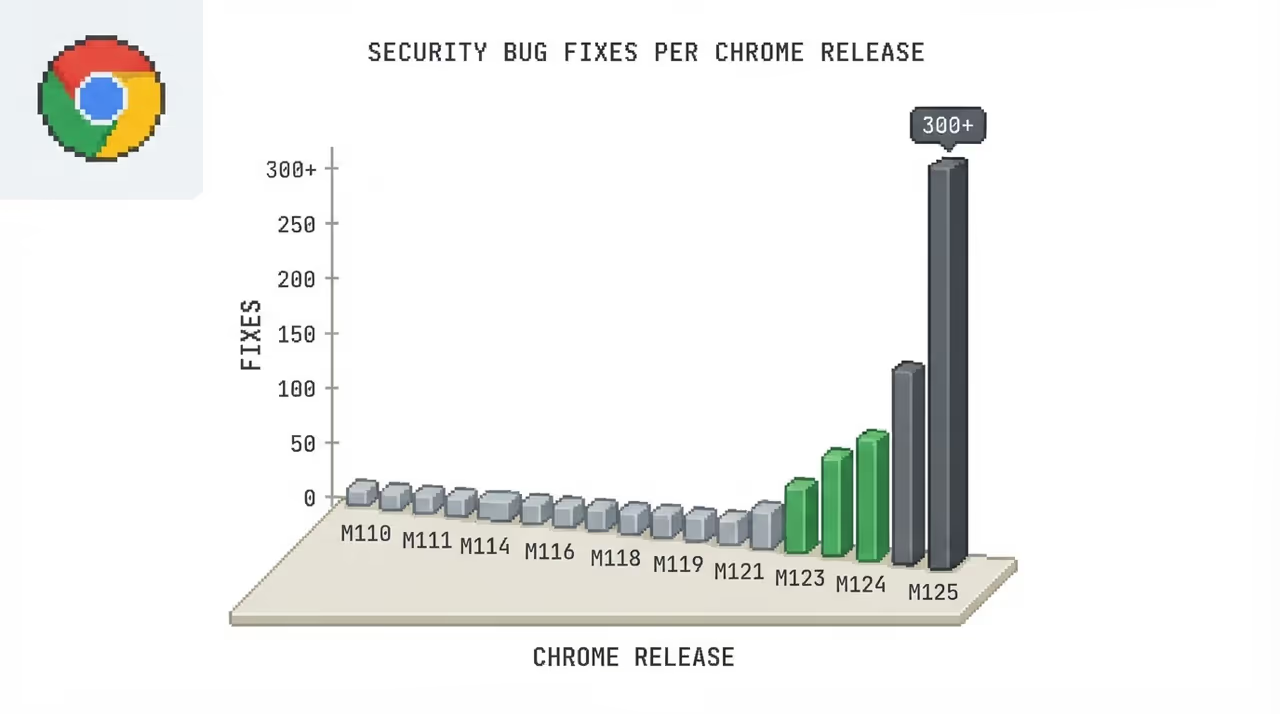
Chrome 149 and 150 both shipped in June 2026, and together they fixed 1,072 security bugs. The 23 stable releases before them, roughly two years of Chrome, fixed 1,036 combined. Two releases outran two years of work.
Google's own chart traces the climb. Releases sat near ~50 bugs each up to M145, then jumped to ~80, ~130, and ~350 before the final leap. It is a hockey stick, roughly doubling release over release and then breaking loose.
23 releases · ~2 years
1,036 bugs fixed
Chrome 149 + 150 · June 2026
1,072 bugs fixed
Two things were straining under the load. Triaging a single security report took a human 5 to 30+ minutes, and by March 2026 external researchers, many running their own AI tools, filed more reports in a single month than in all of 2025. The human-review process could not absorb the flood.
Does 1,072 vs 1,036 compare like for like?
Not cleanly. The framing mixes bugs found with bugs fixed, and internal discoveries with external reports, and the blog never breaks down how much of the 1,072 came from the new agent harness versus fuzzing versus outside reports. One hint at the mix: Chrome 151's follow-up tally showed 349 of 370 fixes were found by Google itself, so external reports look like the minority now.
Stage 1 · Finding
An agent that reads 13 years of git
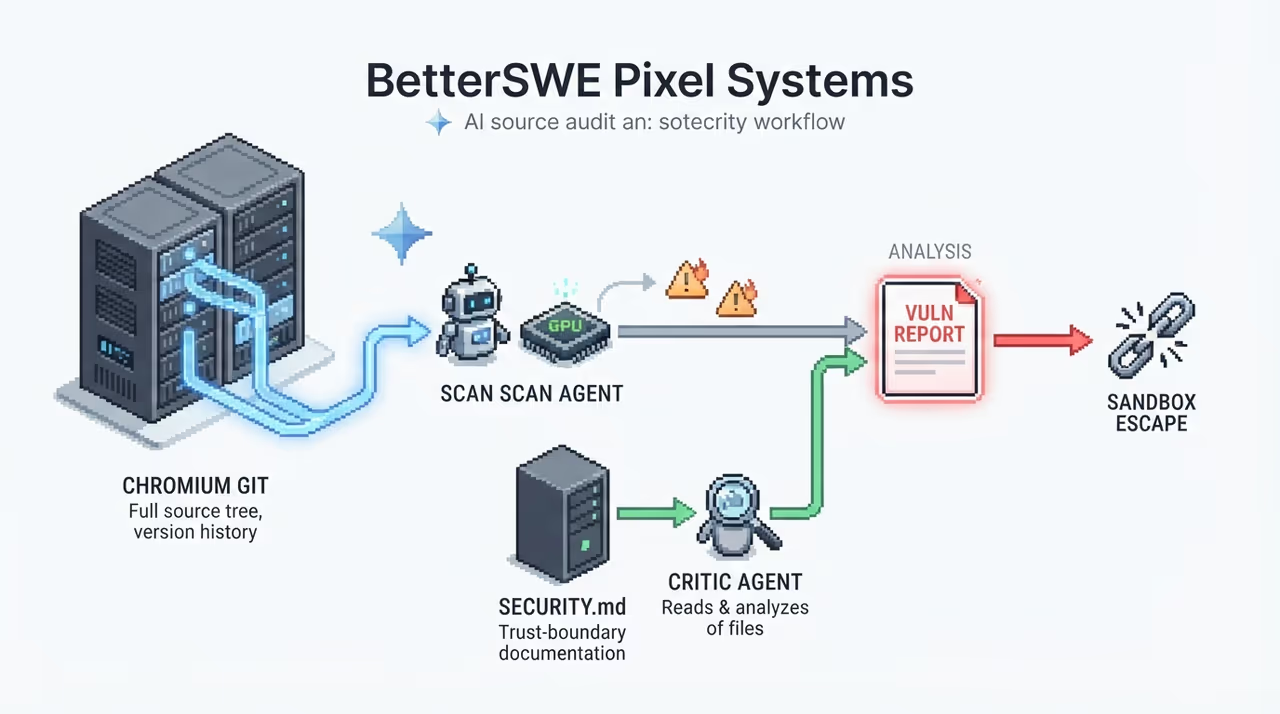
In early 2026 Google deployed an agent harness built on Gemini that scans the entire Chrome codebase, not just the paths a fuzzer can reach. Its knowledge base is built from Chrome's full Git history plus every prior CVE, so the model can reason about code that predates its own training cutoff.
The clever part is a separate critic agent that reads the SECURITY.md files developers maintain per component, which describe each part's trust boundaries and threat model. That is what lets the system ask "is this a security failure" rather than just "does this crash."
full codebase ┐
git history   ├─► Gemini agent ─► candidate bug ─► critic ─► verdict
every CVE     ┘   (multiple passes)              SECURITY.md
                                                 trust boundaries
The headline catch was a 13-year-old sandbox escape (CVE-2026-3545, CVSS 9.6) in the Navigation component, where a compromised renderer could trick the browser into reading local files. No fuzzer or external report surfaced it, because traditional review only revisits code that is actively changing or producing crashes. Nothing systematically re-audits stable code that has sat untouched for a decade. Meanwhile BigSleep and CodeMender now run in CI across all changelists every 24 hours, blocking over 20 vulnerabilities pre-merge in May alone, including one rated critical.
Stage 2 · Triage
From 30 minutes to a routed case file
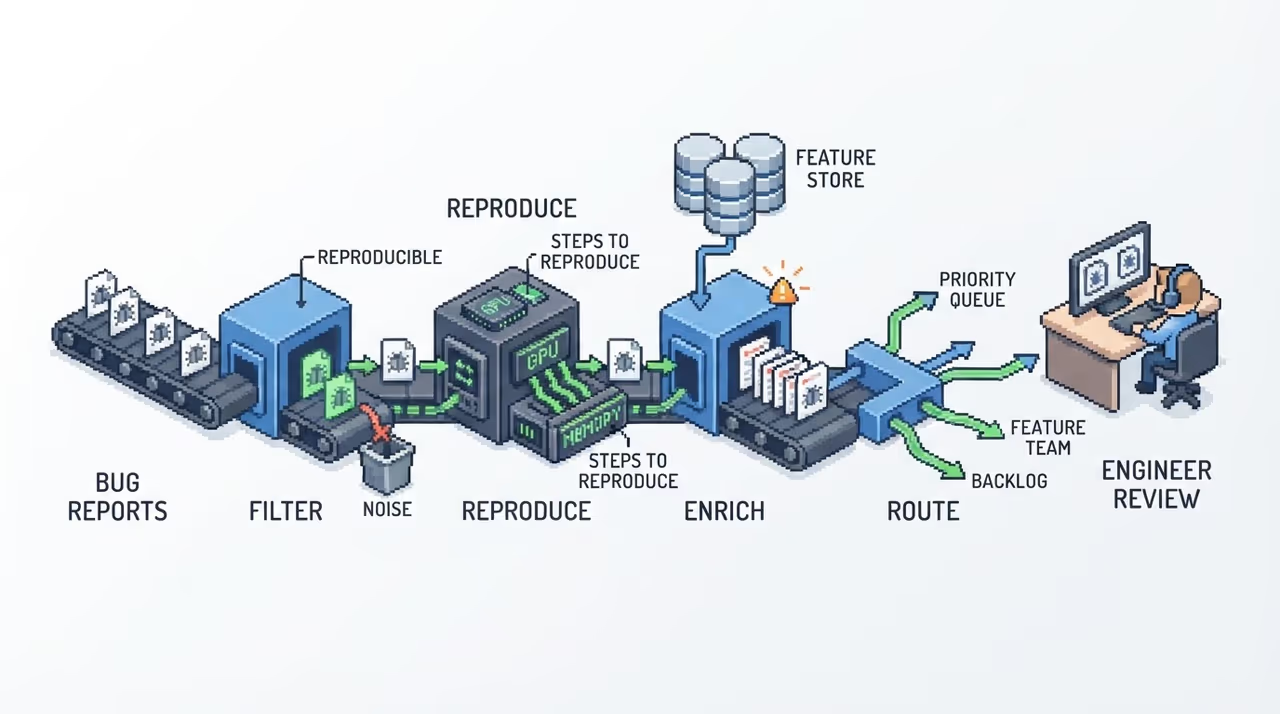
The report flood is where the pipeline earns its keep. Google runs a four-stage automated triage that mixes rule-based filtering with AI: discard the noise, reproduce the bug, enrich it, then route it.
- Filter noise (drop duplicates & non-security)
- Reproduce (spin matching browser/OS, add stack trace)
- Enrich (build a full case file)
- Route (find the correct human owner)
The reproduce step spins up a virtual environment matching the exact browser and OS combo and, if the bug reproduces, attaches a stack trace. By the time a report lands on an engineer's desk it is already reproduced, enriched, and addressed to the right owner. Google estimates this saves hundreds of developer hours a month, while candidly hedging that the number is hard to measure precisely.
Stage 3 · Fixing
Three agents write the patch
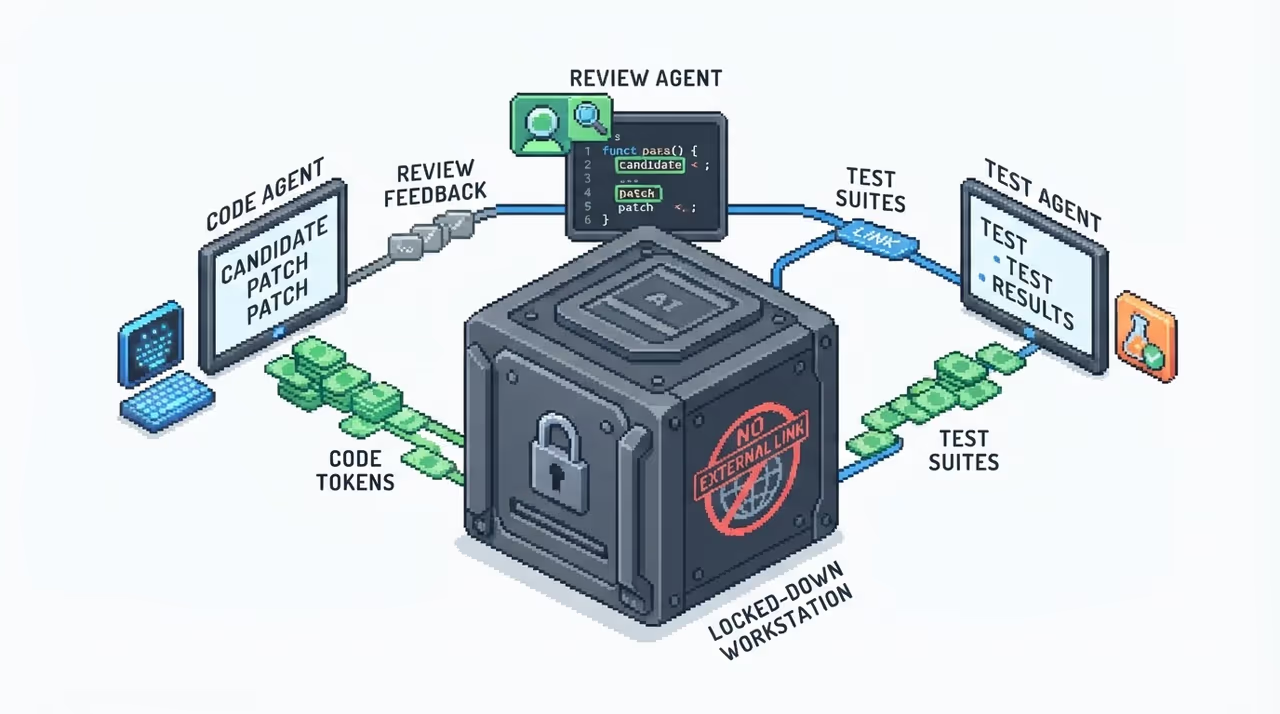
Fixing is a multi-agent handoff. A fixing agent generates several candidate patches, a critic agent evaluates them and produces review artifacts for humans, and a test-writing agent writes cross-platform tests that run before a human ever looks. Google says the test-first step alone can save weeks of iteration.
Fixing agent (candidate patches)Critic agent (review artifacts)Test-writer (cross-platform tests)Human review
How the guardrails box the models in
The models run on locked-down machines with no general internet access, behind a network-intercept setup that enforces strict allowlists per app and destination. Subagents cannot modify the local system or reach files outside their designated source directories, and nothing runs unrestricted.
LLMs now generate candidate fixes for most vulnerabilities, which is what actually drives the 1,072 number. The obvious danger is a hallucinated fix shipped to half the adults on the planet that then fails in the field, which is exactly why the critic and test-writing stages sit between the fixing agent and human review.
Stage 4 · Shipping
Closing the patch gap
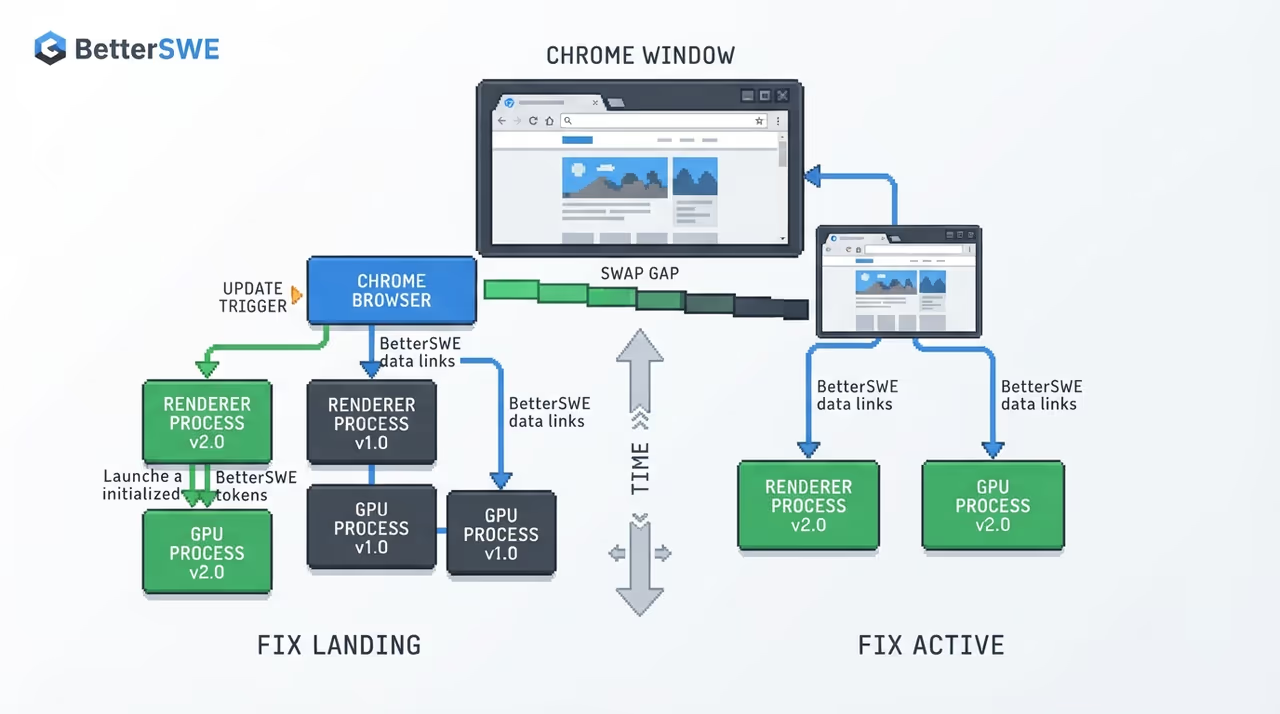
Once a fix lands in the public open-source tree, attackers can reverse-engineer it into an N-day exploit before most users are patched. That interval, the patch gap, historically ran weeks. Google now merges security fixes straight from main into the active Stable branch, is moving major milestones to a two-week cadence with weekly security updates, and is piloting two security releases a week.
before:  fix lands ─► [ wait for user restart ] ─► active   (days+)
now:     fix lands ─► hot-swap Renderer / GPU proc ─► active  (no restart)
Shipping a fix is not the same as applying it: the fix is inert until the user restarts, and users defer restarts for days. Dynamic patching uses Chrome's multi-process design to sequentially swap background child processes, the Renderer and GPU process, for updated binaries without a full restart. In Chrome 150 on macOS, where apps often keep running after their last window closes, Chrome now detects a pending update in that windowless state and silently auto-restarts to apply it.
The tradeoff
What scaling the pipeline reshaped
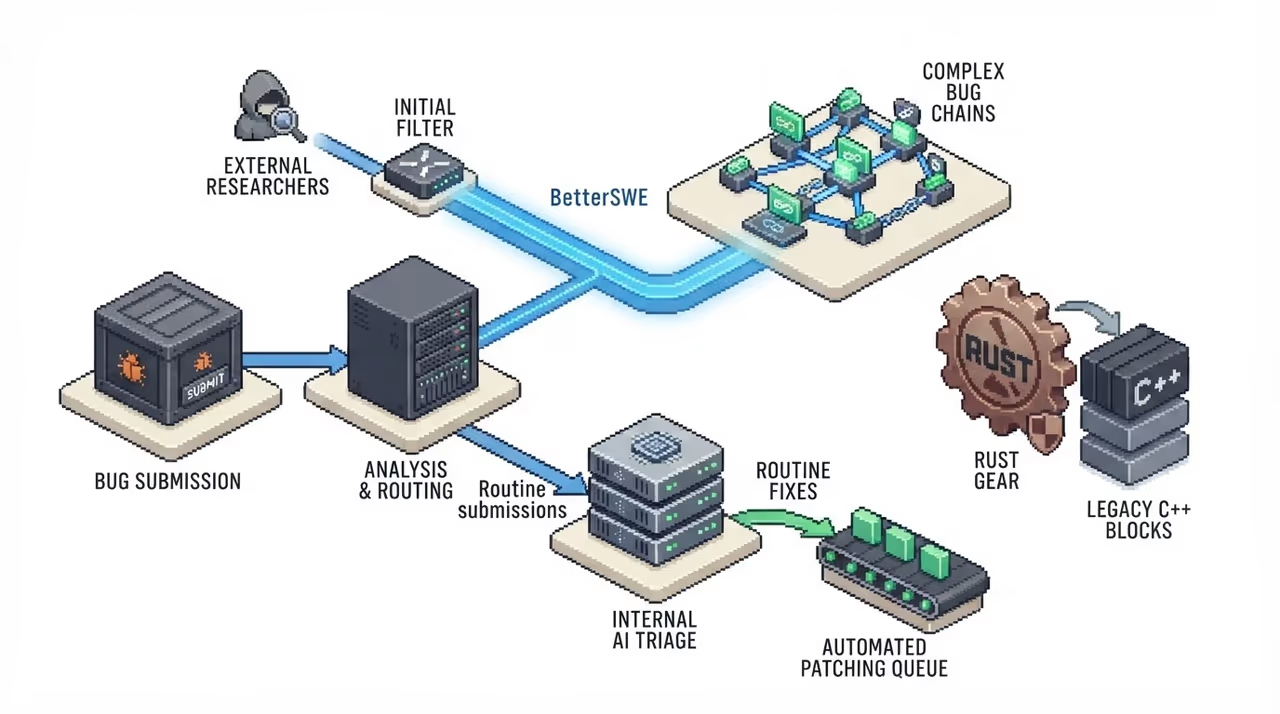
The flood of low-quality external AI reports, combined with internal AI now catching most routine bugs itself, pushed Google to restructure Chrome's Vulnerability Reward Program. It steers outside researchers toward bugs that are additive to internal findings and formatted to feed the automated pipeline, leaving humans most valuable for novel cross-component chains that need real creativity.
Success created its own bottleneck. Writing CVE descriptions and release notes at the new volume overwhelmed the team, so Google is automating that too. A week after 149 and 150, Chrome 151 added 370 more fixes, 349 of them found by Google itself, pushing the three-release total to 1,442.
Fix faster
AI find / triage / fix pipeline
Introduce fewer
Rust SDK + spanification
Running alongside the pipeline is a prevention track aimed at cutting how many bugs get written at all: a centralized Rust SDK for historically bug-dense code like parsers, image codecs, and font stacks, plus "spanification" that has 97% of first-party Chrome code compiling cleanly under strict unsafe-buffer warnings. And even under pressure to move twice a week, Google commits to publicly document every Stable bug, internal or external.
The bottom line
The browser that patches itself
Why it matters
Chrome just showed what an AI-run vulnerability pipeline does to the raw numbers: two releases fixing more than the prior two years combined. Most of the change is structural, not cosmetic. The scarce work moved from finding and triaging bugs to documenting and shipping them, the crowdsourced bounty model got demoted to the hard novel cases, and the update itself is drifting out of the user's hands. For a working engineer the concrete effect is a browser that patches faster and, increasingly, without asking you to restart.
The short version
- Chrome 149 and 150 fixed **1,072 security bugs** in June 2026, beating the prior **23 releases** (1,036) combined; Chrome 151 pushed the three-release total to **1,442**.
- A **Gemini agent harness** scans the whole codebase using Chrome's full git history, with a critic agent reading `SECURITY.md` to judge real security failures, and it surfaced a **13-year-old sandbox escape**.
- A four-stage triage pipeline (filter, reproduce, enrich, route) and a three-agent fix workflow removed the human bottleneck that made ~5-30 min per report unscalable.
- **Dynamic patching** hot-swaps background child processes to shrink the patch gap, and Google is piloting **two security releases a week**.
- The win reshaped the program: the VRP now steers researchers to novel bugs, and a Rust plus spanification track works to introduce fewer bugs in the first place.
Sources
- 1.Chrome AI Fixed More Security Bugs in Two Releases Than in Prior Two Years
- 2.Three Recent Chrome Releases Fix 1,442 Flaws, More Than Prior 23 Updates Combined
- 3.Stronger with every update: How we're making Chrome ...
- 4.Google says it fixed more Chrome bugs in June than over the past two years, thanks to AI
- 5.Chrome Fixes 1,442 Bugs in Three Releases
- 12.How Google used AI agents to find and fix ...
- 13.Chrome Vulnerability Reward Program Rules