System Design · Issue 13
How GitHub's Telemetry Pipeline Hits 1.6 Million Events a Second
A 700TB/day logging firehose outgrew its hand-tuned Java stack. The fix was serverless, one batch size, and a ceiling set by partition count.

The constraint
A firehose the old stack couldn't hold
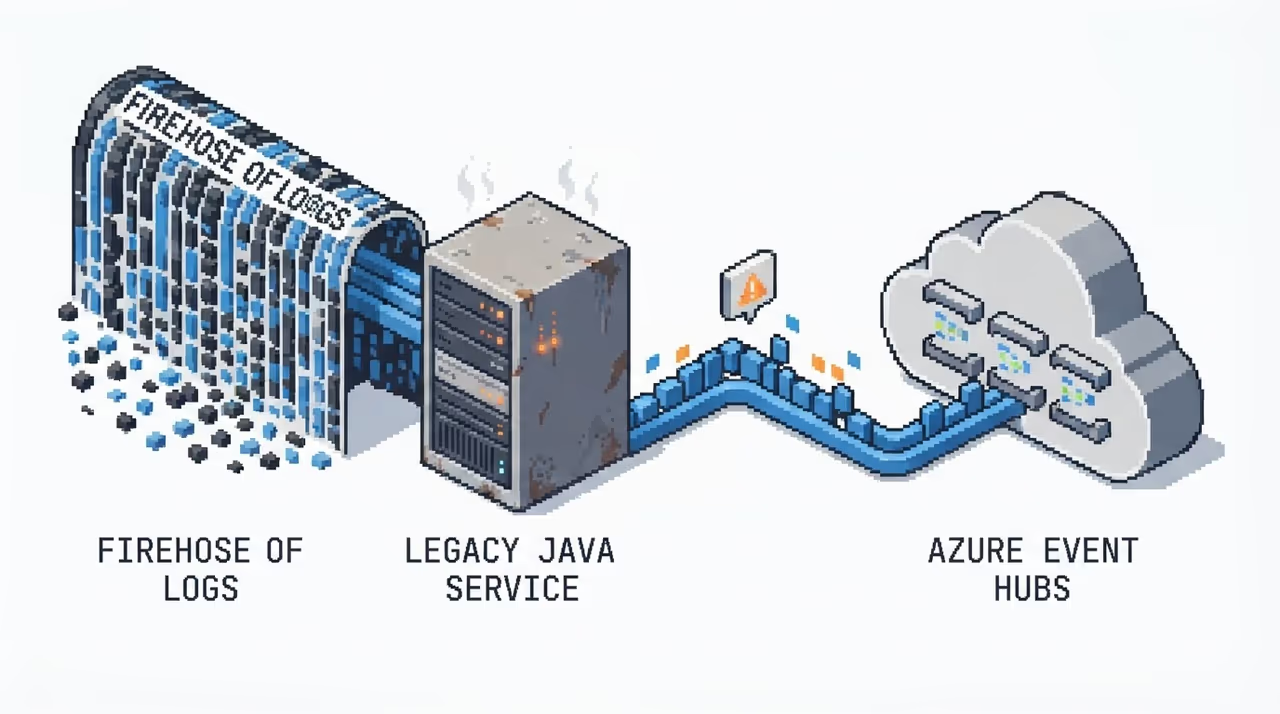
GitHub is enormous, and it keeps growing. A new developer joins the platform roughly every second, which means the internal systems watching it never get quieter. One of those systems is a telemetry and security-logging pipeline that swallows about 700 TB of data per day, used to spot malicious behavior and troubleshoot the platform.
The ingestion layer that fed it was a set of Java binaries layered on Azure Event Hubs, sitting between telemetry producers and the consumers that process the data. At up to 460 GB of events per day it was already "reaching its design limits," and availability was starting to slip.
producers ──▶ [ Java app ] ──▶ Event Hubs ──▶ consumers
                  │
            manual tuning
            per consumer
            (slow, fragile)
The pain was operational. Every consumer needed its own environment and manual, time-consuming tuning to perform well, the Java code was prone to breakage and hard to debug, and the compute bill kept climbing. As GitHub's Stephan Miehe put it, the internal system was limiting the company's growth.
The choice
Make the ingestion layer disappear
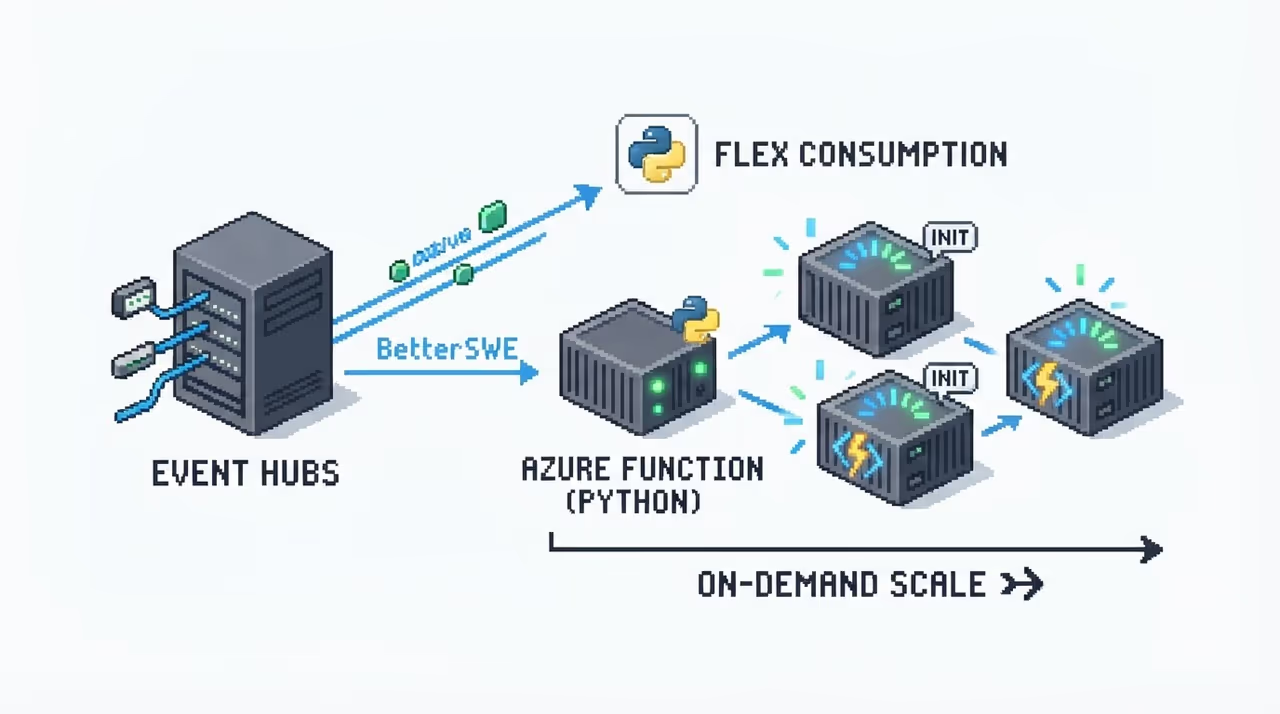
The actual job here is simple: accept events and hand them on, closer to an HTTP POST than a complex service. GitHub wanted a serverless platform with minimal overhead so the team could stop babysitting environments, and since they were already on Event Hubs they went looking through Azure-native options and landed on Azure Functions.
They joined the private preview of a new plan called Flex Consumption, which offers large scale-out, long execution times, private networking, instance-size selection, and concurrency control. The new app is written in Python, triggered directly from Event Hubs.
Java + Event Hubs
per-consumer envs, manual tuning
Python on Flex Consumption
serverless, scales on demand
The flexibility comes with a catch that Miehe named directly: Flex Consumption gives you "a lot of knobs to turn," and there is a balance between that flexibility and the effort of setting it up right. The next three slides are about which knobs actually mattered.
Knob one
Batch until it hurts, then back off
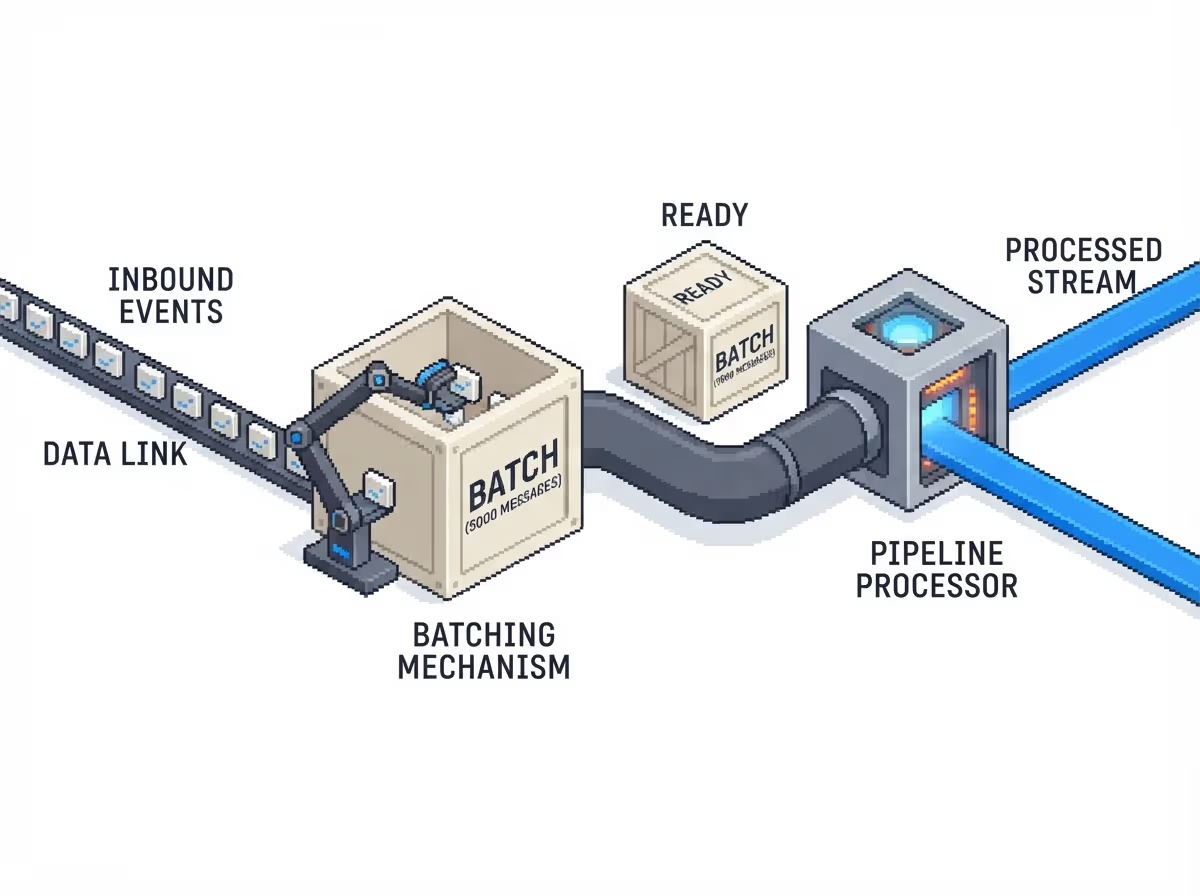
The single biggest throughput lever was batching. Instead of shuttling events one at a time, the function consolidates large numbers of messages into one larger message before handing off to the consumers that do the real processing. Fewer, fatter handoffs mean the per-invocation overhead stops dominating.
Batch size is a genuine sweet spot, not a formula. Too large and an instance runs out of memory to process the batch; too small and you spawn so many executions that overhead swamps the work. GitHub settled on 5,000 messages per batch through experimentation, with each function execution finishing in about 100 to 200 milliseconds.
batch too small     →  too many runs, overhead wins
batch too large     →  out of memory
batch ≈ 5,000 msgs  →  ~100–200 ms/run  ✓
It is worth sitting with how ordinary this is. The clever part of a millions-per-second pipeline turned out to be picking one integer well, because that integer decides whether memory or overhead becomes the bottleneck first.
Knob two
Scaling that reads the queue, not the lag
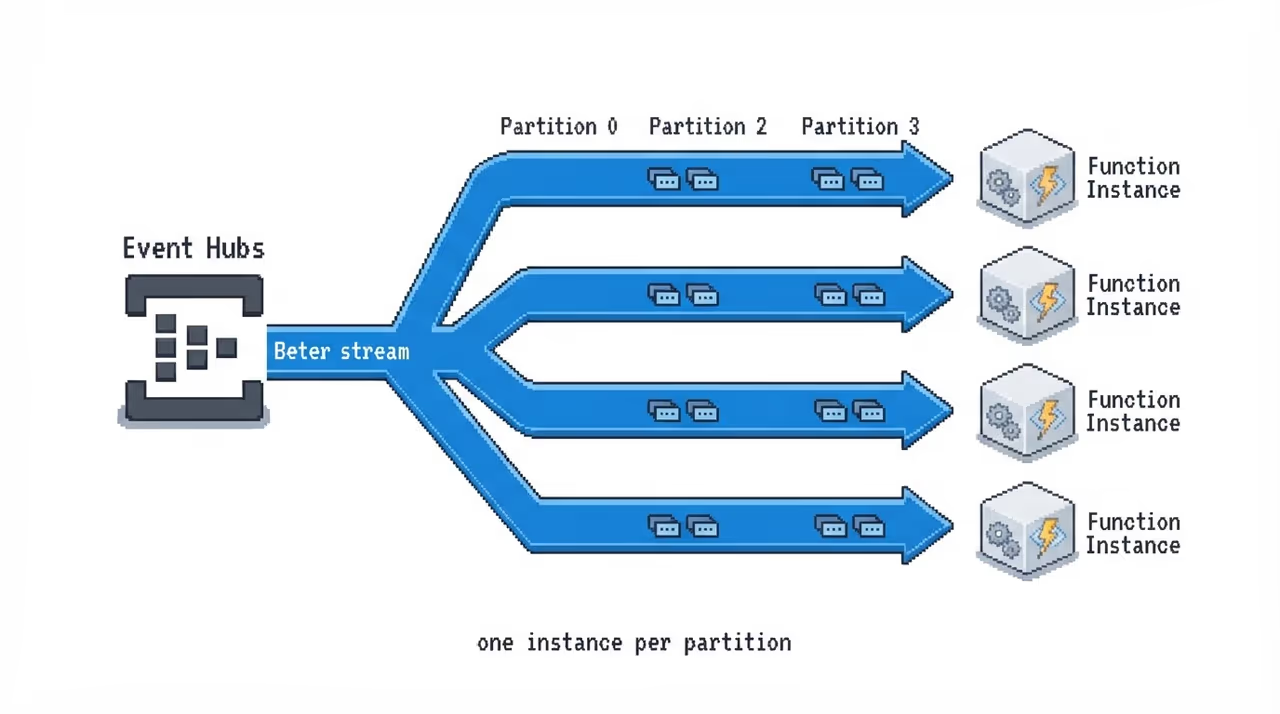
Azure Functions uses target-based scaling here. Rather than waiting to notice rising latency and reacting after the fact, it looks at how many unprocessed messages are sitting on the event hub and, given the batch size and partition count, jumps straight to an appropriate instance count.
The ceiling is structural: the app scales out to at most one instance per event hub partition, up to 1,000 instances for the largest deployments. Partition count becomes a hard planning decision. Miehe's warning is blunt: be deliberate about how many partitions you provision, because if you don't have enough, you constrain consumption no matter how elastic the compute is.
Event Hub (N partitions)
- Instance 1
- Instance 2
- Instance N
This is the sense in which the system "refuses to scale further": elasticity is real, but it is capped by a number you chose up front. Under-provision partitions and Functions will happily stop adding instances well before your traffic does.
The result
Run both, and hunt for the wall
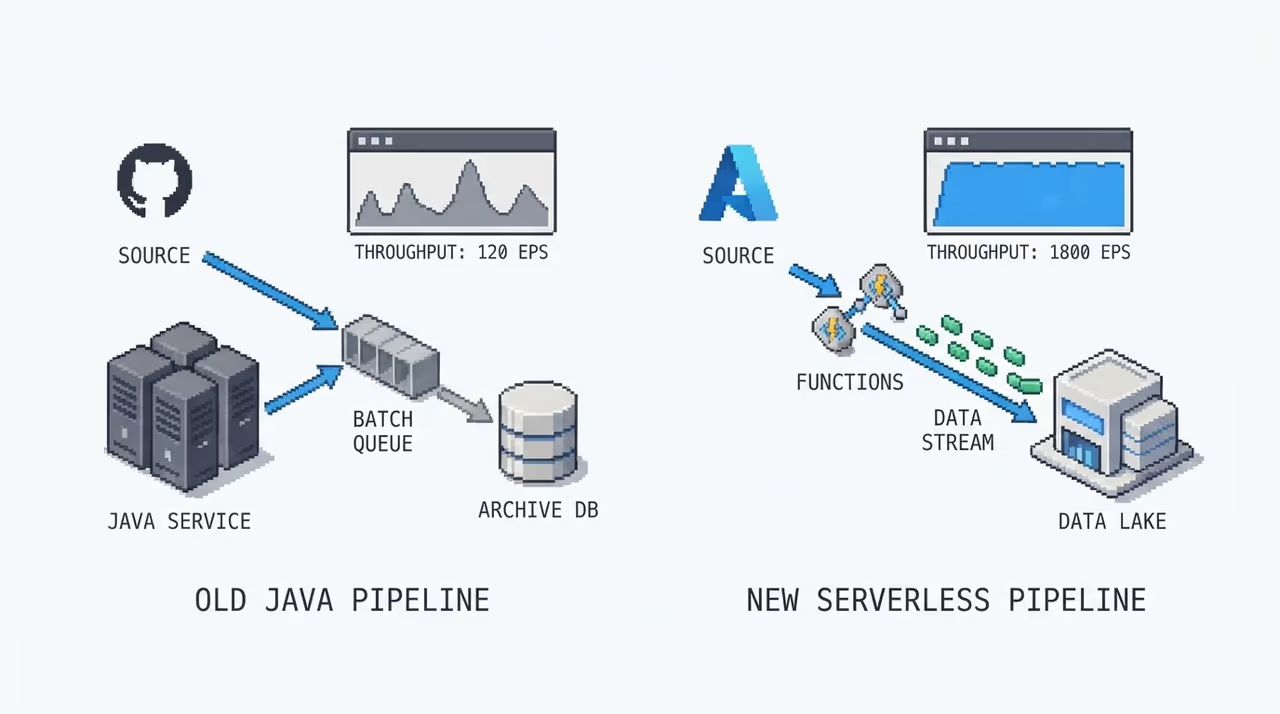
With the knobs set, a single Flex Consumption app sustained 1.6 million events per second against a network-restricted event hub, and production peaks run above 1 million events per second. Underneath, a new Microsoft PaaS backbone called Legion gets fresh compute onto the private network fast: outbound VNet connectivity in 624 ms at p50 and 1,022 ms at p90, with cold-start latency down about 53% platform-wide over 18 months.
The most telling decision was the cutover. GitHub deliberately ran the old and new pipelines side by side to find where the ceiling is before trusting it, rather than assuming the numbers held in production. The selection goal was headroom: as Miehe framed it, they didn't want to migrate again in six months because they'd hit another wall.
The takeaway
Elastic, but only to the line you drew
Why it matters
GitHub replaced a hand-tuned Java ingestion tier with a serverless one that moves millions of events a second, and the story is a good corrective to "serverless just scales." The real limits moved from operational toil to two deliberate choices: the batch size and the partition count. Any team pairing Event Hubs with Functions inherits the same partition-bound ceiling, so provisioning it wrong quietly caps throughput long before the compute layer gives out.
The short version
- GitHub's ~700 TB/day telemetry pipeline outgrew a Java + Event Hubs stack that maxed near **460 GB/day** of events.
- Rebuilt on **Azure Functions Flex Consumption** in Python, it sustains **1.6M events/sec** and peaks above **1M/sec**.
- **Batching to 5,000 messages** was the main throughput lever, balancing per-run overhead against memory.
- **Target-based scaling** adds instances by queue depth, but caps at **one instance per partition** (up to 1,000).
- Partition count is the hidden ceiling, so GitHub **dual-ran old and new** to find the real wall before cutover.